
Information not accurate?
Help us improve by making a suggestion.
Experience Native American Culture and Historic Grand Portage at Vibrant Rendezvous Days & Powwow Festival
Attend the Grand Portage Rendezvous Days & Powwow, register now, and find nearby lodging to immerse in Indigenous culture and history.
Event details
Grand Portage occupies the northeastern tip of Minnesota’s Arrowhead Region, where the Pigeon River forms the border with Ontario and Lake Superior’s waters reflect the Canadian Shield’s ancient geology. The Grand Portage National Monument — co-administered by the National Park Service and the Grand Portage Band of Lake Superior Chippewa — marks the site of the North West Company’s most important inland depot, the hub through which the 18th-century fur trade’s entire Great Lakes-to-Montreal supply chain was organized. The 2026 Rendezvous Days run August 7 through 11 at the monument, with the Celebration Powwow hosted by the Grand Portage Band of Lake Superior Chippewa running August 7 and 8 on the powwow grounds adjacent to the monument. Both events are free to attend. Pets are not permitted at the powwow out of respect for the ceremony and the performers.
Two Distinct Gatherings on the Same Weekend
Rendezvous Days at the monument recreates the 1797 North West Company rendezvous in which Montreal-based “winterers” — the fur trade’s long-range canoe teams — met the company’s inland posts brigades at Grand Portage to exchange a winter’s worth of harvested pelts for the trade goods and provisions needed for the next season. The monument’s volunteer re-enactors erect period canvas encampments, haul birchbark canoes across the original nine-mile portage trail, and demonstrate the specific material culture of the late 18th-century fur trade in a format that the National Park Service has developed over decades into one of the most historically substantive living history events in the Great Lakes region. Events and demonstrations run through games, music, crafts, cooking demonstrations, and competitive activities specific to the fur trade era.
The Grand Portage Celebration Powwow, on the hill above the monument grounds, is the other event running simultaneously — an intertribal gathering organized by the Grand Portage Band that draws more than 300 dancers and drum groups from communities across the United States and Canada. Grand entries are at 1:00 p.m. and 7:00 p.m. Saturday and 1:00 p.m. Sunday. The powwow’s programming includes a hand drum contest, jingle dress special, turkey shoot, royalty contest, mixed softball tournament, walk/run, bingo, and old-timer’s softball game. For powwow information and vendor registration, contact Brittany Anderson at 218-370-1291 or [email protected].
Grand Portage and Lake Superior’s North Shore
Grand Portage sits at the end of Minnesota Highway 61’s northernmost stretch, where the lakeshore road terminates 150 miles northeast of Duluth. The Grand Portage State Park, 2 miles from the monument, contains High Falls on the Pigeon River — at 120 feet, the highest waterfall in Minnesota — accessible via a 1-mile accessible paved trail from the park’s visitor center. The Grand Portage Island, visible from the monument’s lakeside position, shelters the bay from Lake Superior’s prevailing northeasterly weather and gives the site the protected harbor geography that made it the fur trade’s logical inland supply point.
Where to Eat Near Grand Portage
The Ryden’s Border Store and Cafe (Grand Portage, at the US-61/Trans-Canada Highway junction, open since 1938) is the most geographically specific dining institution available in this corner of Minnesota — a combination gas station, grocery, and cafe operating at the international border crossing that has served the northeastern Minnesota and southwestern Ontario border community for nearly 90 years. The house breakfast of eggs, hash browns, and locally smoked whitefish on whole-grain toast is the preparation most specific to this remote Lake Superior community. In Grand Marais, 36 miles southwest on Highway 61, Angry Trout Cafe (Hwy 61 W. at the harbor, open seasonally since 1990) is the North Shore’s most celebrated locally sourced restaurant, with a menu anchored by Lake Superior cisco, herring, and whitefish caught within sight of the dining room’s lake-facing windows — the smoked whitefish spread on house rye crisp and the pan-seared Lake Superior lake trout with local herb butter are the kitchen’s most place-specific preparations.
Points of Interest for Families
High Falls at Grand Portage State Park (2 miles from the monument on Highway 61) is the single most accessible major waterfall in Minnesota — the paved, ADA-compliant trail reaching the 120-foot falls is appropriate for strollers and wheelchairs, making it the most democratically accessible natural landmark on the entire Lake Superior North Shore. The Grand Portage Heritage Center at the monument provides the interpretive framework for both the fur trade history and the Ojibwe culture that preceded and outlasted it — the center’s exhibits on the Grand Portage Band’s contemporary governance and cultural preservation give the weekend’s powwow attendance a contextual depth that enhances the visitor experience considerably.
Book Your Stay on the Lake
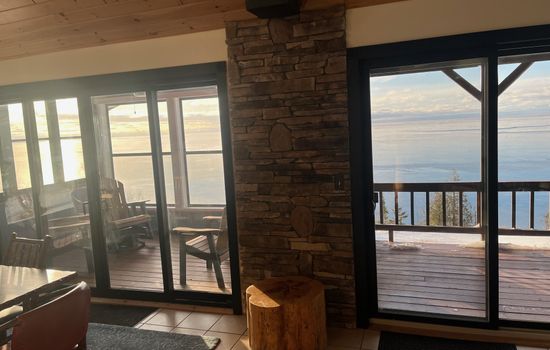
Lake Superior’s Minnesota shoreline from Two Harbors through Grand Marais to Grand Portage supports a growing vacation rental market in the North Shore corridor. Search Lake.com for properties along the Lake Superior North Shore to find cabins and lake-view homes within driving range of the Grand Portage events. August availability on the North Shore fills with summer travelers; book several months in advance for the Rendezvous Days weekend.
Information not accurate?
Help us improve by making a suggestion.