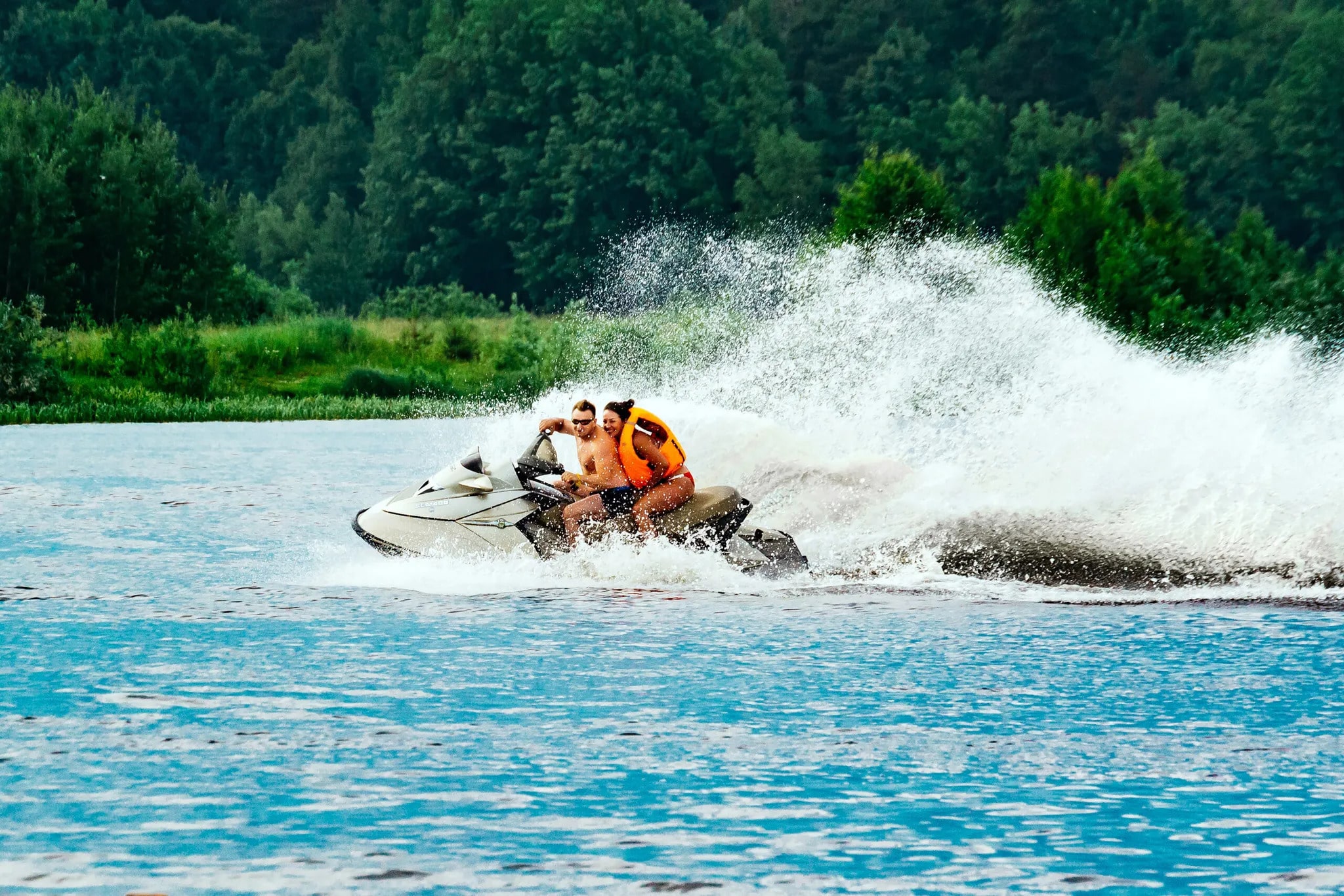

Few things match the feeling of skimming across glassy lake water at full throttle, the warm air rushing past you, the shoreline a blur of green and blue.
Jet skiing on a lake is one of the most exciting warm-weather activities your family or group can share together, whether you’re first-timers nervous about the controls or seasoned riders ready to carve tight turns in open water.
Today, we’ll cover everything from choosing the right personal watercraft (PWC) to the best lakes in the U.S. for a day on the water, so you can stop second-guessing and start planning.
What Is Jet Skiing, and Is It Right for You?
A jet ski, or personal watercraft (PWC), is a small, motorized watercraft built for one to three riders. The term “jet ski” technically refers to Kawasaki’s brand name, but most people use it to describe all PWCs, including Sea-Doo and Yamaha WaveRunner models.
Jet skiing on a lake is a great fit for you if:
- You want a high-energy activity that the whole family can take turns enjoying
- You’re looking for something beyond swimming, fishing, or paddleboarding
- You’re renting a lakefront cabin and want to make the most of your dock access
- You have teenagers who need something to keep them genuinely excited about a lake vacation
If you’ve never ridden before, don’t worry. Most people get comfortable on a jet ski within 20 to 30 minutes, especially on calm lake water where there’s no ocean surge or boat traffic to manage.
“Lakes are honestly the best place to learn,” says Marcus Webb, a rental operator at Lake Havasu in Arizona. “The water is calm, visibility is good, and riders can stay close to shore while they build confidence.”
What Are the Different Types of Jet Skis?
Before you rent or buy, it helps to know what you’re getting into. PWCs come in a few distinct styles, each built for a different kind of rider.
| Type | Best For | Key Feature | Approx. Price (New) |
|---|---|---|---|
| Stand-Up PWC | Experienced riders, freestyle | Smaller, more physical to ride | $5,000 – $9,000 |
| Sit-Down Recreational | Beginners, families | Stable, easy to control | $7,000 – $12,000 |
| Sit-Down Performance | Speed enthusiasts | High horsepower, fast acceleration | $12,000 – $20,000+ |
| Luxury / Touring | Long rides, multi-passenger | Comfortable seating, large storage | $14,000 – $18,000 |
For most lake vacationers, a sit-down recreational model is the sweet spot. It’s stable enough for kids to ride with an adult, easy to maneuver in smaller coves, and forgiving when you’re still learning the throttle.
How Do You Ride a Jet Ski Safely?
Safety on a jet ski is not complicated, but it does require you to pay attention before you climb on. Here’s what every rider should know.
The Essential Safety Gear
Never get on the water without these:
- Life jacket (PFD): Required by law in all U.S. states and most Canadian provinces. Choose a U.S. Coast Guard-approved fit that sits snugly on your chest without riding up.
- Safety lanyard (kill switch cord): This clips from your life jacket to the ignition. If you fall off, the engine cuts out automatically, so the jet ski doesn’t keep moving without you.
- Whistle or air horn: Required by law in many places and genuinely useful if you need to signal other watercraft.
- Sunglasses or goggles: Sun glare on open water is intense. Polarized lenses help you see clearly and protect your eyes.
- Wetsuit or rash guard: Even in summer, lake water can be cold. A thin wetsuit keeps you comfortable and protects your skin.
Basic Riding Tips for First-Timers
- Start slow. The throttle on a jet ski is controlled by a thumb lever. Press lightly at first and get a feel for how quickly the machine responds.
- Keep your knees slightly bent. Standing stiff-legged on the footrests is uncomfortable and throws off your balance. Bend your knees like you’re absorbing bumps on a mountain bike.
- Lean into your turns. This feels counterintuitive, but leaning into a turn rather than away from it keeps the PWC stable and in control.
- Give other watercraft plenty of space. Most states require a minimum distance from other boats, swimmers, and docks. A good rule of thumb: stay at least 100 feet from any other person on the water.
- Check the throttle-off behavior. Jet skis only steer when the throttle is engaged. If you let go of the throttle completely, you lose steering. Many beginners panic and release the throttle when heading toward something, which makes the problem worse.
Quick Tip: Take a boating safety course before your first ride. Many states require it for riders under 16, but it’s useful for adults too. The National Association of State Boating Law Administrators (NASBLA) lists approved courses online.
What Are the Rules for Jet Skiing on a Lake?
Jet skiing is regulated at the state and sometimes county level in the U.S., so the exact rules vary depending on where you’re riding. That said, a few requirements are nearly universal.
Common rules across most states:
- All riders must wear an approved life jacket
- A safety lanyard must be attached to the operator
- Operators must be a minimum age (often 16 to operate alone; some states allow 14 with a safety card)
- No wake zones must be respected at low speeds near docks, swimmers, and marinas
- Riding between sunset and sunrise is prohibited in most places
- A boating safety certificate is required in most states for operators under 18
If you’re renting, the rental company will walk you through the local rules as part of their orientation. If you’re bringing your own PWC, check the state’s parks and wildlife agency website for current regulations before you launch.
Is Jet Skiing Safe for Kids?
Yes, with the right setup and supervision. Most kids ages 8 and up can ride as a passenger on a sit-down PWC with a licensed adult. Whether a child can operate one independently depends on state law, but most states require riders to be at least 14 to 16 years old before taking the controls.
What to keep in mind when riding with children:
- Use a child-sized, properly fitted life jacket, not an adult one with the straps cinched down
- Sit the child in front of you so you can hold them securely
- Keep speeds low and avoid sudden turns
- Watch for signs of cold or fatigue, since kids tire faster than they let on
- Choose a lake with calm, protected coves rather than open, choppy water
Families with younger children often find that tubing behind a jet ski is a better starting point. You can control the speed, the child has a secure handle to hold, and they still get that thrilling feeling of skimming across the water.
How Much Does It Cost to Rent a Jet Ski?
Rental rates vary by lake, season, and craft type, but here’s a general idea of what to expect in 2026:
| Duration | Typical Cost Range |
|---|---|
| 30 minutes | $55 – $90 |
| 1 hour | $90 – $150 |
| Half day (3–4 hours) | $250 – $400 |
| Full day (8 hours) | $400 – $600 |
Peak summer weekends at popular destinations like Lake Tahoe or Lake Havasu will fall at the higher end of these ranges. Midweek rentals and off-peak shoulder season dates (late May or early September) are often 20–30% cheaper.
Most rental companies require:
- A valid driver’s license (or state boating certificate for operators under 18)
- A credit card for a security deposit (typically $200 – $500)
- You to complete a short safety orientation before launch
Call ahead to confirm availability during busy weekends. Walk-in rentals at popular lakes fill up fast on Saturday mornings in July and August.
What Are the Best Lakes for Jet Skiing in the U.S.?
Not every lake is equally well-suited for jet skiing. Wide-open water, clear visibility, and reasonable rules around PWC use make a big difference. Here are some of the best lakes to put on your radar.
Lake Havasu, Arizona / California
Lake Havasu is one of the most popular PWC destinations in the country, and for good reason. The water is warm, blue-green, and remarkably clear, and the lake stretches for 45 miles between Arizona and California, giving you plenty of room to open up the throttle. The London Bridge area near Lake Havasu City is a great place to anchor and take a break. Water temperatures stay above 80°F from June through September.
Lake Tahoe, California / Nevada
Lake Tahoe is breathtaking from the water. The high-altitude air is crisp and clean, the water is an almost impossibly blue shade, and the surrounding Sierra Nevada mountains give every ride a cinematic backdrop. Rental operators are located around the south shore near South Lake Tahoe and along the north shore near Kings Beach. Be aware that Tahoe’s water is cold even in summer, so a wetsuit is a smart call. Find a lakefront rental near Lake Tahoe on Lake.com.
Lake of the Ozarks, Missouri
Known as the “Magic Dragon” for its winding, dragon-shaped shoreline, Lake of the Ozarks is one of the largest man-made lakes in the U.S. and a longtime hub for water sports. The open mid-lake sections are perfect for high-speed rides, and there are dozens of waterfront restaurants and marinas where you can dock and grab lunch mid-ride.
Lake Cumberland, Kentucky
Lake Cumberland is a quieter alternative to the big-name destinations but offers over 1,200 miles of shoreline and consistently calm water. It’s a strong choice for families looking for space without heavy boat traffic on peak weekends.
Lake George, New York
In the Adirondacks, Lake George combines stunning mountain scenery with clear water and a well-developed tourism infrastructure. Rentals are easy to find in Lake George Village, and the lake’s southern basin is calm enough for beginners, while the northern stretches offer more open-water riding.
How Do You Choose the Right Jet Ski to Buy?
If you’re thinking about owning rather than renting, here’s how the major brands compare on the key things that matter for lake riding.
| Brand | Popular Model | Horsepower | Best For | Starting Price |
|---|---|---|---|---|
| Sea-Doo | Spark | 60–90 HP | Budget, beginners, lighter riders | ~$7,500 |
| Sea-Doo | GTX 170 | 170 HP | Families, multi-day touring | ~$14,000 |
| Yamaha | VX Cruiser | 110 HP | Versatility, reliability | ~$11,000 |
| Yamaha | FX Cruiser HO | 180 HP | Comfort, longer rides | ~$16,000 |
| Kawasaki | Ultra 310LX | 310 HP | Performance, speed | ~$19,500 |
For most lake families, a mid-range model in the 110–170 HP range offers the best balance of fun, fuel efficiency, and practicality. The Sea-Doo Spark is worth a look if you’re buying for younger or lighter riders on a tighter budget; it’s the most affordable new PWC on the market and easy to trailer.
What Advanced Moves Can You Learn on a Lake?
Once you’re comfortable with the basics, a few techniques can make your rides more engaging. Lakes are ideal practice spots for these because the water is typically calmer and less crowded than coastal areas.
Carving: Lean into a turn while holding steady throttle to cut a clean arc through the water. It feels smooth and controlled, like carving a ski turn on snow.
360 spin: At low-to-medium speed, cut the throttle slightly, crank the handlebars hard in one direction, and reapply throttle as you lean into the turn. It takes a few attempts to get the timing right, but it’s a crowd-pleasing trick that’s well within reach for intermediate riders.
Riding wakes: As you get more comfortable, practice crossing the wake of a nearby boat at a slight angle rather than straight on. It gives you a lift and builds your sense of balance at speed.
Tubing: Attach a tube to your jet ski’s tow hook and tow a passenger through open water. Keep speeds between 15 and 25 mph for younger children and work up from there. It’s a reliable crowd-pleaser for multi-generational lake trips.
How Do You Maintain a Jet Ski After Lake Use
Proper maintenance keeps your PWC running well and protects your investment over many seasons.
After every ride:
- Flush the engine with fresh water if you’ve been in a lake with algae or high mineral content
- Drain the hull through the bung plugs so no standing water stays inside
- Rinse the exterior and seat with fresh water to remove grit and sunscreen residue
- Check for any scrapes, cracks, or damage to the hull
Seasonal maintenance:
- Change the engine oil every 50 hours of use or once per season
- Replace spark plugs every 100 hours
- Inspect and clean the jet pump intake for weeds, debris, and fishing line (a common lake hazard)
- Replace the battery every 3 to 5 years and keep it on a trickle charger during winter storage
- Fog the engine and stabilize the fuel before winterizing
Why it matters: A neglected jet ski can develop serious engine issues after just one season of deferred maintenance. A simple post-ride rinse and a seasonal oil change will add years to your PWC’s life.
Ready to Plan Your Lake Jet Skiing Trip?
Whether you’re booking a week at a lakefront cabin or spending a long weekend at a popular water sports destination, Lake.com makes it easy to find properties with the dock access and open water you need for a great jet skiing experience. Use the search filters to find rentals that include watercraft access, boat docks, and proximity to PWC rental operators.
You bring the sunscreen. We’ll help you find the perfect lake.