
Fishing from a jet ski isn’t as unusual as it sounds. In fact, it’s one of the fastest-growing ways to get on the water — and for good reason.
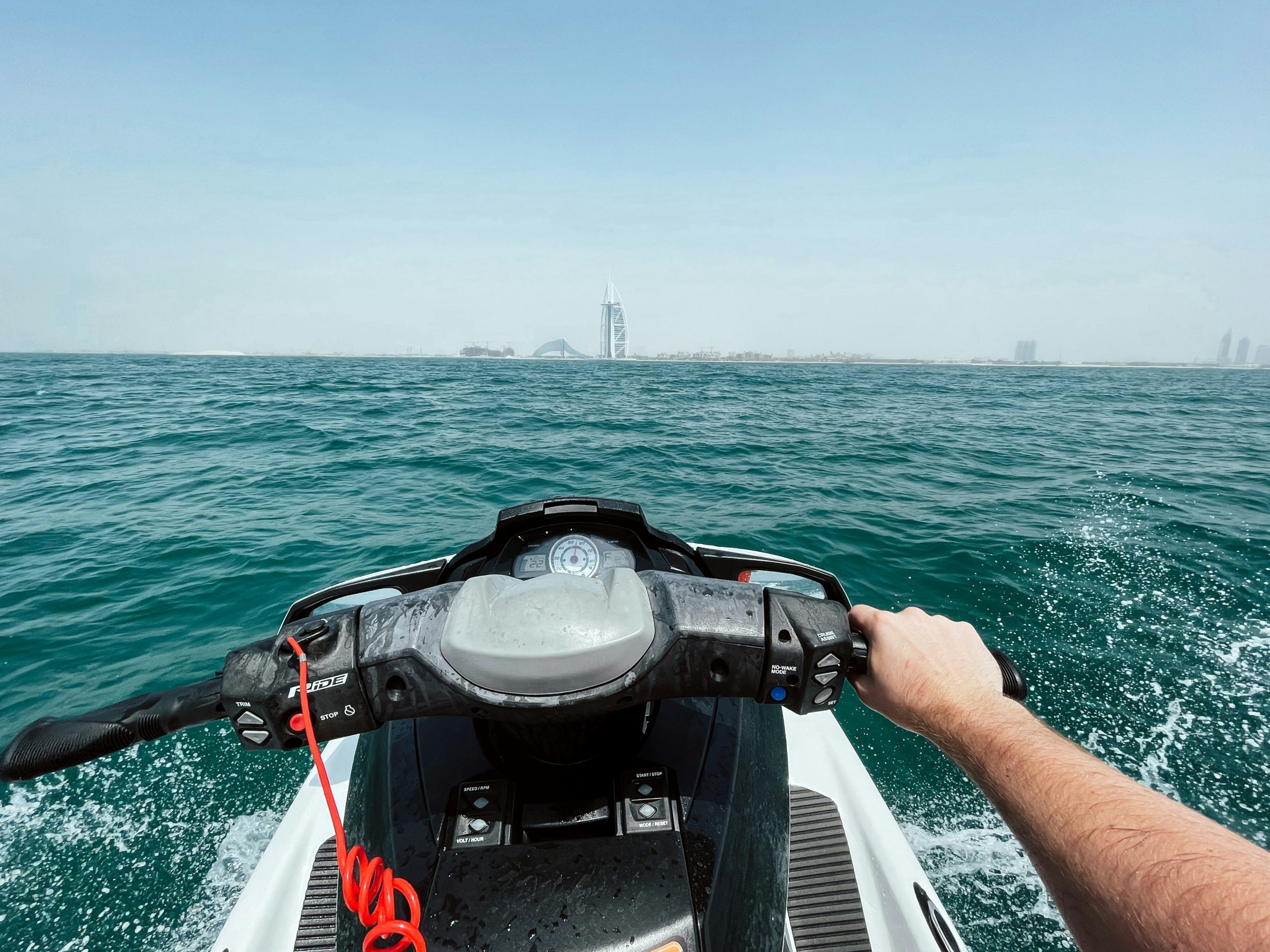
A personal watercraft (PWC) can reach spots a full-sized fishing boat can’t. It’s cheaper to run, easier to launch, and surprisingly versatile once you add the right gear. If you already love being on the water, combining that with a fishing rod is a natural next step.
Today, we’ll cover everything you need to get started: what gear to bring, how to set up your PWC, what safety rules apply, and how to make it part of a memorable lake trip.
Is Jet Ski Fishing Right for You?
Not every angler will love jet ski fishing. But for the right person, it’s hard to beat.
It’s a good fit if you:
- Want access to shallow coves, narrow channels, or hard-to-reach spots
- Prefer a more active, adventurous fishing experience
- Fish alone or with one other person
- Are you looking for a lower-cost alternative to a full-sized fishing boat
- Enjoy the flexibility of launching quickly without a lot of setup
It’s worth knowing the limitations too. You’ll have less deck space, less storage, and fewer creature comforts than a traditional fishing boat. You’ll need to think carefully about how you stow your gear and what you bring.
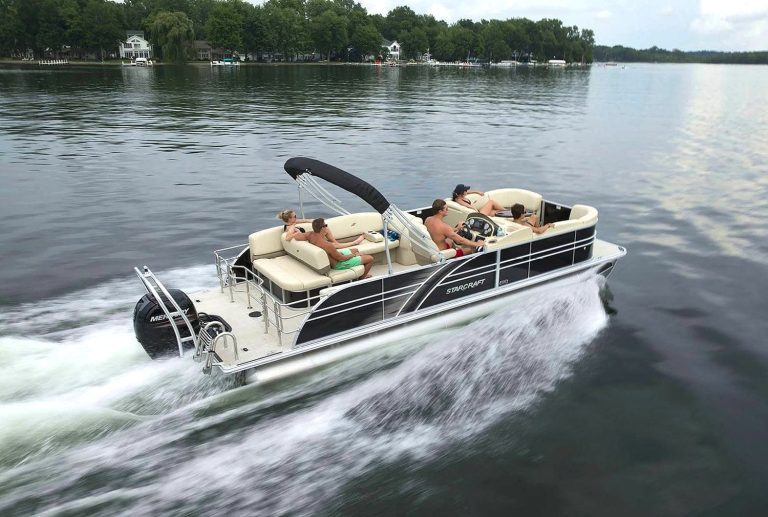
If you’re planning a full day on the water with a group, a pontoon or fishing boat rental may be a better call. But for solo trips or a day exploring a lake on your own terms, a fishing jet ski opens up a lot of possibilities.
Choosing the Right Jet Ski for Fishing
If you’re shopping for a PWC specifically for fishing, look for models that offer:
- Deck space and stability — enough room to stand and maneuver when you’re reeling in a catch
- Engine power — especially if you plan to fish offshore or in open water
- Hull design — a wider, flatter hull is more stable at rest
- Storage — front hatches and rear cargo areas give you room for tackle, rods, and a cooler
Jet ski fishing involves using a PWC, like the popular Sea-Doo Fish Pro, to navigate and fish in various waters. This sport gained traction in South Africa and later found fans in Australia, New Zealand, and North America.
Since around 2015, North Americans have shown increasing interest in it.
There are several benefits to using a fishing jet ski:
- Maneuverability: PWCs are easy to handle, offering access to fishing spots that larger boats can’t reach.
- Size and Storage: Despite their smaller size, many fishing jet skis come equipped with fishing-specific gear, such as rod holders, coolers, fish finders, and even GPS systems.
- Speed: PWCs like the Sea-Doo Fish Pro Trophy are fast, allowing you to cover more ground quickly than traditional fishing boats.
Jet skis like the Sea-Doo Fish Pro Scout or the Sea-Doo Fish Pro Sport are designed specifically for fishing. These models come with powerful engines, usually 150 to 180 HP, ensuring they can handle the demands of a day out on the water.
The Kawasaki Jet Ski Ultra 310LX-S Angler and the Yamaha FX platform can be modified for fishing with aftermarket accessories.
If you’re renting rather than buying, ask the rental operator whether they have a fishing-ready model available or whether modifications are permitted.
Essential Jet Ski Fishing Gear
Once you have the right watercraft, the gear setup makes all the difference.
Fishing Equipment
- Rods and reels — lightweight graphite or composite rods work best. A spinning reel is a practical choice for jet ski fishing because it’s easy to use with one hand.
- Tackle and bait — use waterproof tackle boxes that fit snugly into your storage compartments. If you’re using live bait, you’ll need a small insulated cooler to keep it fresh.
- Fishing license — always confirm the licensing requirements in your destination before you head out. Requirements vary by province, state, and water body.
Jet Ski Fishing Accessories
- Rod holders — a non-negotiable addition. They keep your rods secure while you’re underway and free up your hands when you’re managing a catch.
- Fish finder and GPS — a mounted fish finder helps you identify productive spots. A GPS adds safety by tracking your position and helping you navigate back to the dock.
- Cooler or fish box — a compact, mountable cooler keeps your catch fresh and doubles as storage for drinks and snacks.
- Canopy or sun shade — there’s no shade on open water. A mounted canopy makes a long day on the water much more comfortable and protects you from sun exposure.
- Dry bags — keep your phone, ID, and anything that can’t get wet in a secure, waterproof bag.
How to Rig Your Jet Ski for Fishing
Rigging is all about making your gear accessible without cluttering the deck or creating safety hazards.
Rod Holders Mount rod holders in positions that keep rods within reach but out of your line of sight. Make sure they can accommodate the size and weight of the rods you plan to use.
Bracket and Platform Systems Aftermarket fishing platforms attach to the rear or sides of a PWC and create extra mounting points for rods, racks, and storage. These are especially useful if you want to add a rear basket or cooler rack without permanent modifications.
Stabilizers (Sponsons) Jet ski stabilizers — sometimes called sponsons or PWC stabilizer kits — attach to the sides of the hull and improve stability when the watercraft is at rest. This matters a lot when you’re sitting still and focused on a cast rather than keeping your balance.
Storage Solutions Use a combination of front hatches, rear baskets, and mounted cooler racks to distribute weight evenly. Secure everything before you start moving. Losing gear overboard is more common than you’d think.
Safety on the Water
Jet ski fishing is safe when you prepare for it. A few things to keep in mind before you go:
- Wear a properly fitted life jacket — this is required in most jurisdictions and good practice regardless
- Check weather before leaving — conditions can shift quickly on open water
- Know your fuel range — jet skis have smaller tanks than boats; understand how far you can go before needing to turn back
- Don’t overload — adding a cooler, rod holders, and gear adds weight; stay within the manufacturer’s recommended capacity
- Carry communication tools — a waterproof phone case or VHF radio is worth having, especially if you’re fishing away from other boaters
- Practice casting from a stationary position on land before you’re on the water — it’s more awkward than it looks
If you’re renting a PWC, arrive early and listen carefully to the safety briefing. Ask the operator about restricted areas, no-wake zones, and any rules specific to the lake or waterway.
Rules, Licenses, and Local Regulations
Requirements vary depending on where you’re fishing and what province or state you’re in.
Before you head out, confirm:
- Fishing license requirements — most regions require a valid fishing license even for catch-and-release
- Boating operator requirements — many provinces and states require a boater education card or license to operate a PWC
- Age restrictions — minimum age requirements for operating a jet ski vary widely
- Restricted areas — some lakes and waterways have no-wake zones, wildlife protection areas, or fishing exclusion zones
Always check with the rental operator and local authorities before you launch. Following the rules protects you, the fishery, and the experience for everyone else on the water.
What to Bring on a Jet Ski Fishing Day
On the water:
- Rod and reel
- Waterproof tackle box
- Live bait cooler (if using live bait)
- Landing net
- Fishing license (digital or waterproof card)
Safety and gear:
- Life jacket
- Dry bag with phone and ID
- Sunscreen (water-resistant, SPF 50+)
- Sunglasses and hat
- Water and snacks
- First-aid basics
- GPS or phone mount
Optional but useful:
- Fish finder
- Lightweight anchor
- Waterproof camera
Some of these items may come with a rental. Confirm with the operator before you pack.
Make It Part of a Lake Getaway
A morning of jet ski fishing is even better when you have a comfortable place to come back to.
Staying close to the water means shorter trips to the launch, easier gear storage, and the flexibility to head out early and stay out late. A lake house or cottage near the marina puts the whole experience within reach — not just the boat.
Look for properties that offer dock access, nearby boat launches, or proximity to the lake’s best fishing coves. Many guests combine a day of jet ski fishing with kayaking, paddleboarding, or simply spending an afternoon on the water with family.
Common Mistakes to Avoid
- Forgetting to check the fishing license requirement — it varies by location and applies to jet ski fishing just like any other method
- Overloading the PWC — extra gear adds up fast; stay within the weight limit
- Skipping the safety briefing — even experienced riders benefit from knowing the specific rules of a new waterway
- Not securing gear properly — everything on a jet ski needs to be strapped or stowed; nothing should be loose
- Booking too late in the season — popular fishing lakes get busy in summer; plan ahead and confirm rental availability before your trip
FAQ Section
What is jet ski fishing? Jet ski fishing means using a personal watercraft (PWC) instead of a traditional fishing boat. The PWC is outfitted with rod holders, a cooler, and sometimes a fish finder, giving anglers access to spots that are difficult to reach by a larger boat.
Do I need a license to go jet ski fishing? In most places, yes. You’ll likely need both a valid fishing license and a boating operator card or certificate to operate a PWC. Requirements vary by province, state, and waterway. Always confirm before you go.
Can you fish from any jet ski, or do you need a special model? Any stable, reliable PWC can be modified for fishing with aftermarket accessories. That said, purpose-built fishing models like the Sea-Doo Fish Pro series or the Kawasaki Ultra Angler come with features such as integrated rod holders, fish finders, and coolers.
How do you store your catch on a jet ski? Most jet ski anglers use a mountable cooler or fish box attached to the rear of the PWC. These keep the catch fresh and can also hold drinks and food for the day.
Is jet ski fishing safe? Yes, with proper preparation. Wear a life jacket, check weather conditions before leaving, stay within the weight limits of the watercraft, and carry a communication device. If you’re renting, ask the operator about any specific rules for the waterway.
Can two people fish from a jet ski? It’s possible on a three-person PWC, but it takes coordination and balance. Most experienced jet ski anglers fish solo or with one companion who is comfortable on the water.
What should I bring on a jet ski fishing trip? The essentials: rod and reel, tackle box, fishing license, life jacket, sunscreen, water, dry bag for your phone, and a cooler if you plan to keep your catch. A GPS or phone mount is helpful for navigation, especially on larger lakes.