A Smoky Mountain Guide for Every Family
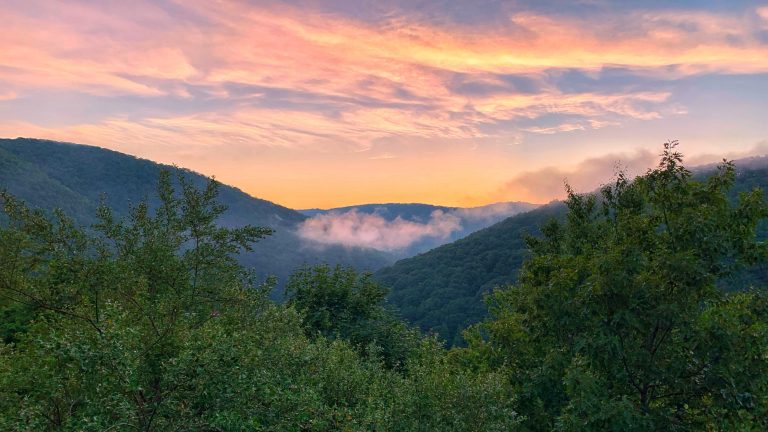
By mid-afternoon in Pigeon Forge, TN, the Great Smoky Mountains have gone blue-grey above the treeline, and the Parkway below them is doing its usual complicated math: families in sandals crossing toward the next dinner show, a line forming at the Old Mill candy kitchen, a couple on the pedestrian bridge photographing the ridge before the light goes. It is, against every expectation of a town with this many go-kart tracks, a genuinely good moment to be standing still.
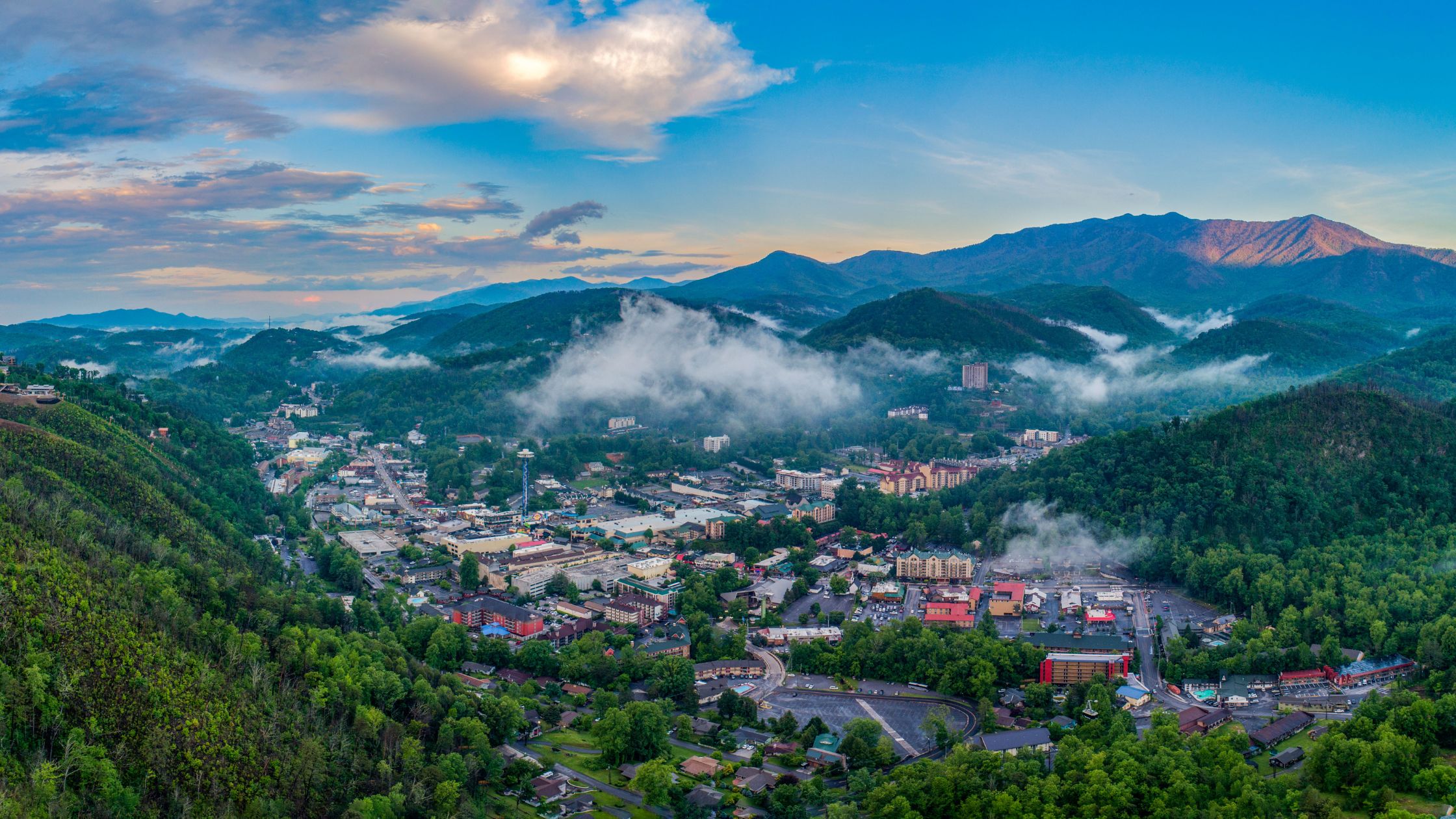
Pigeon Forge sits in Sevier County, East Tennessee, between Sevierville to the north and Gatlinburg to the south — about 35 miles southeast of Knoxville and roughly 3.5 hours from Nashville. Gatlinburg, the mountain-gateway counterpart, is five miles south, a 15-minute drive without traffic. Together, the two towns form a single destination ecosystem, with Pigeon Forge offering a broader range of entertainment. The Pigeon River, which gave this city its name, after the 19th-century iron forge that once operated on its banks, still runs below the commercial gloss of the strip.
What to do in Pigeon Forge ranges from the serious (Great Smoky Mountains National Park, the most-visited in the United States, begins where the Parkway ends) to the deliberately silly (a dinner show in which two feuding Appalachian families compete via acrobatics and meat-based weaponry).
The question is not whether there’s enough — it’s how to sequence it.
The Essential Experiences: Things to Do in Pigeon Forge
Dollywood (2700 Dollywood Parks Blvd)
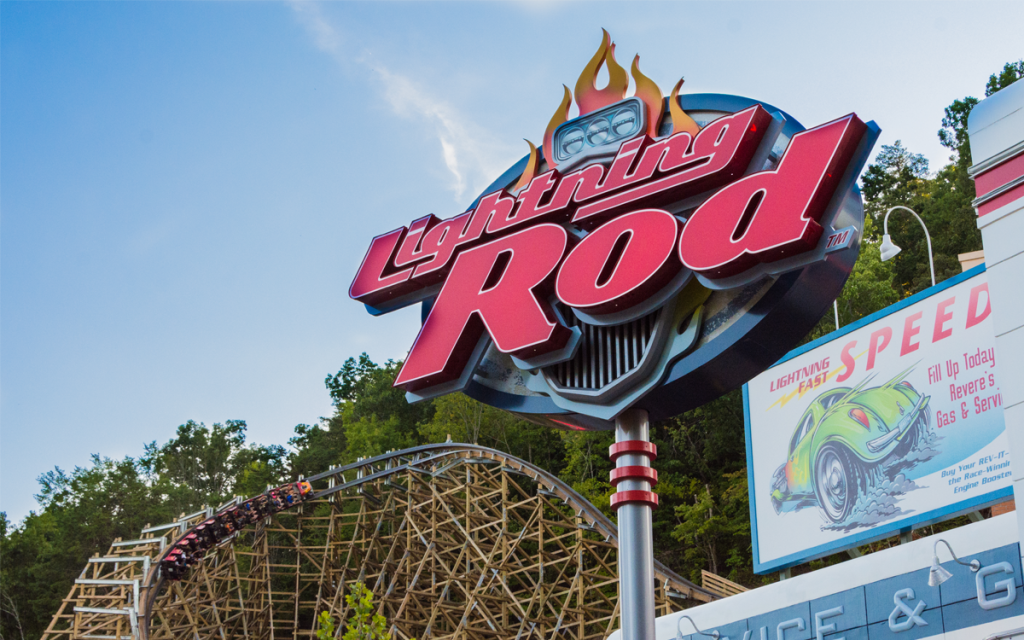
There is no neutral position on Dollywood: it is one of the best regional theme parks in the United States, and it earns that standing year after year. The 165-acre park’s Eagle Mountain Sanctuary — a walk-through bald eagle aviary — is as worth your time as any roller coaster on the property. In 2026, the park opens NightFlight Expedition inside the new Hidden Hollow Aviation pavilion: the world’s first indoor family hybrid coaster and whitewater river raft ride, moving through a bioluminescent Smokies environment that works for thrill-seekers and anyone who prefers to experience the ride from a raft.
Insider move: skip the $30 parking fee by taking the trolley from Patriot Park ($2.50 each way, every 15–20 minutes). Admission typically $99–$120 for adults; multi-day passes are significantly better value.
Sarah Nicole of My Macroscopic Life shares informative travel content with a special focus on the Smoky Mountains and East Tennessee. She is also a travel planner and creates custom itineraries for her clients.
sarah nicole, my macroscopic life
“A must-attend family-friendly event in Pigeon Forge is Dollywood’s Flower & Food Festival. It combines huge colorful floral displays, seasonal food, live entertainment, and the fun of Dollywood all in one visit. It’s especially great for families because there’s something for every age, whether you’re there for rides, shows, or simply enjoying the atmosphere.”
The Island in Pigeon Forge
The 23-acre entertainment complex on the Pigeon River is free to enter and earns its place at the center of any Pigeon Forge itinerary. The Great Smoky Mountain Wheel offers a 10-minute elevated view of the surrounding ridgeline — go at dusk.
The fountain show runs evenings on a regular schedule and draws a reliable crowd. In 2026, Jurassic Adventure adds 22 life-sized interactive dinosaurs, including a 23-foot Brachiosaurus, to the grounds at no charge.
Leashed dogs are welcome on the exterior promenade; the Mellow Mushroom draws the post-show crowd late on weekends.
“Personally, I absolutely love spending an evening at The Island. It’s one of those places that works for almost everyone. They have rides for kids, an arcade, shops, restaurants, and the fountain show. It has a fun atmosphere and gives families plenty to do without needing a rigid plan.”
sarah nicole, my macroscopic life
Great Smoky Mountains National Park
Free to enter and beginning within minutes of the Pigeon Forge Parkway, the park is the non-negotiable anchor of any Smokies trip. Cades Cove — an 11-mile one-way loop through a historic valley — is where black bears, white-tailed deer, and wild turkey appear reliably enough that binoculars are worth packing. The Roaring Fork Motor Nature Trail offers a quieter alternative: a 5.5-mile, one-way, forested road (closed November through March) that follows a mountain stream past old-growth timber and historic homesteads. Arrive at either before 9 a.m. on summer weekends.
Old Mill District (175 Old Mill Ave).
The working water-powered grist mill, dating to 1830, still grinds corn and grits for sale on-site — it is free to watch and worth watching. The surrounding square holds pottery studios, a candy kitchen, and a molasses-and-crock general store. It costs nothing to walk; the griddle-corn pancakes at the Old Mill Restaurant are what the regulars order, and the wait on weekend mornings is real. The mill pond, visible from the stone bridge, is where the town’s actual pace lives.
Dolly Parton’s Stampede (3849 Parkway).
The dinner-show format is a genre, and the Stampede is among its most committed practitioners: 32 horses, specialty acts, and a four-course meal anchored by rotisserie chicken and corn on the cob served in an arena seating 1,000. The Christmas edition, running late October through early January, adds a production layer that rewards revisiting. Tickets typically $55–$72 for adults; children under four are free. Groups should book in advance — weekend performances sell out weeks ahead in summer.
Outdoor Activities Around Pigeon Forge
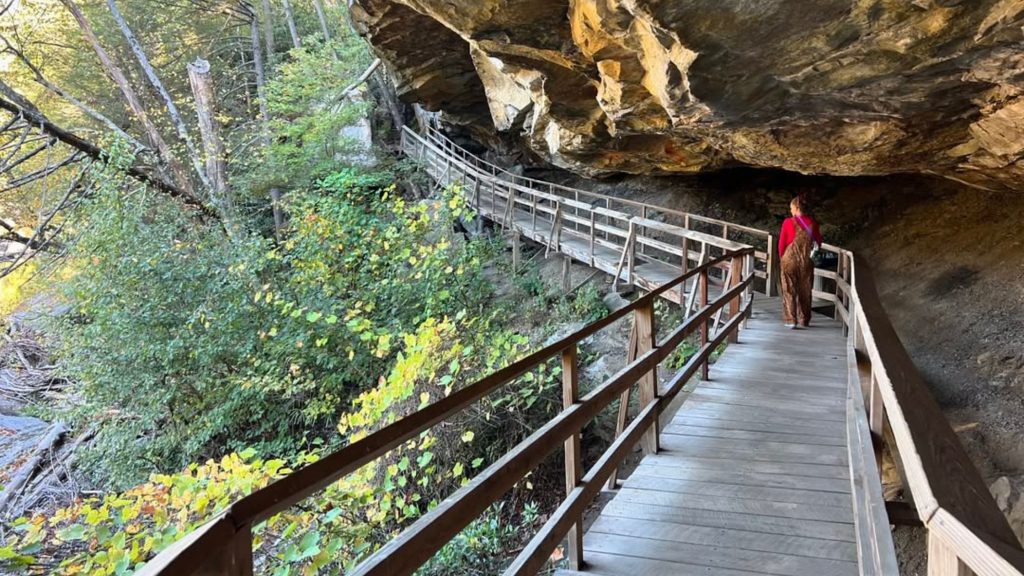
The Smokies trail system is vast, and the park’s elevation range is generous, which means conditions vary significantly within a single drive. Pigeon Forge itself sits at roughly 1,000 feet; the ridge above Gatlinburg exceeds 6,000. Plan accordingly.
On the Water
Douglas Lake — 13 miles north near Sevierville — offers boat ramps, kayak rentals, and shoreline fishing for largemouth bass without the National Park’s pedestrian congestion. It is a top-100 Bassmaster lake and hosts over 200 bird species, including bald eagles in late winter. The seasonal lake level drops from September through mid-April; plan water-based activities for May through August. Legacy Mountain Ziplines operates seven lines up to 2,500 feet long on 400 private wooded acres above Pigeon Forge — the guides narrate the Smokies’ natural history during transfers between platforms.
Hiking and Trails
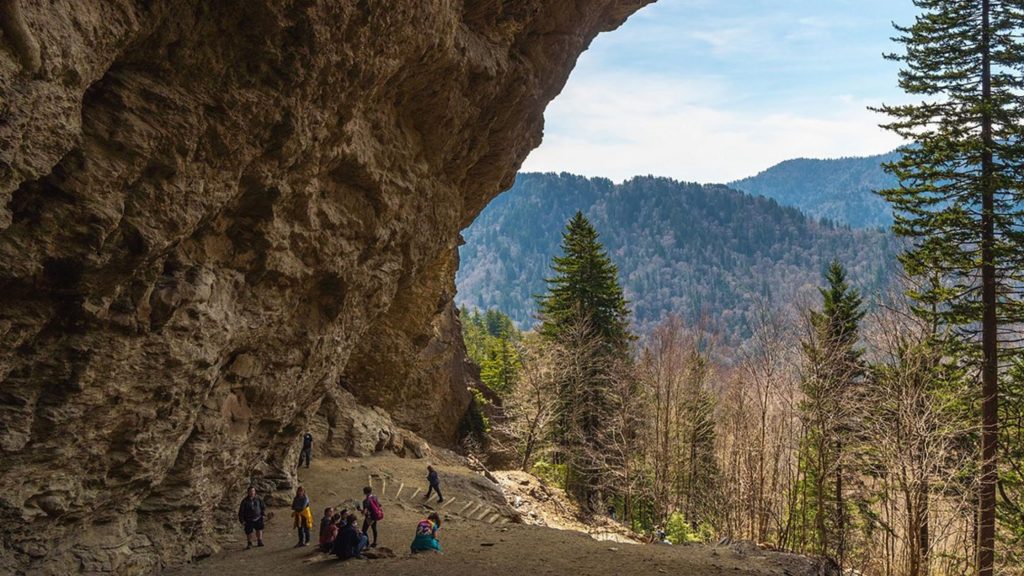
Alum Cave Trail (4.4 miles round-trip, moderate, trailhead on Newfound Gap Road) is the most rewarding Smokies hike accessible within 30 minutes of Pigeon Forge. The bluff arch at mile 1.1 is where most first-timers stop; the full push to LeConte Lodge opens a ridgeline that earns the additional effort. Leashed dogs are permitted to the arch only — no pets beyond that point. Porters Creek Trail in Greenbrier (3.9 miles, easy-moderate) is the spring wildflower choice: mid-April trillium and phacelia carpeting the forest floor, with a historic Appalachian homestead at the turnaround. Two wide-plank benches at the creek crossing make this one accessible to slower walkers in the group.
Scenic Drives and Lookouts
The Foothills Parkway West — accessed via Walland, 25 minutes from the Pigeon Forge Parkway — runs 16 miles along an exposed ridge with unobstructed Smokies panoramas and almost none of the park-bound traffic. The most-photographed pullout is approximately six miles from the western terminus; arrive within an hour of sunset. Newfound Gap Road (US-441 through the park) is the essential cross-mountain drive: it climbs from Gatlinburg at 1,400 feet to the Tennessee-North Carolina state line at 5,046 feet in 14 miles. Pull over at the Newfound Gap overlook for the full view — on clear mornings, the haze lifts before 10 a.m.
Indoor and All-Weather Activities
Titanic Museum (2134 Parkway)
The ship-shaped building is the most recognizable structure on the strip, and the museum inside consistently surpasses its exterior promise. Guests receive boarding passes assigned to real passengers; the final room delivers the outcome. A preserved section of actual hull plating, a first-class stateroom recreation, and a 28°F water tank — which most visitors refuse to keep a hand in for more than a few seconds — make this substantive. Admission typically $28–$32 for adults; book in advance on peak weekends as timed-entry slots sell out.
WonderWorks (100 Music Rd)
The upside-down building hosts a genuine mix of interactive science exhibits, laser tag, and a ropes course — the kind of rainy-day option where three hours disappear without a single moment of ‘are we done yet.’ The earthquake simulation and the lie-detector challenge hold adult interest alongside the exhibits designed for younger visitors. Plan two to three hours; buy tickets online for a modest discount.
Hatfield & McCoy Dinner Feud (119 Music Rd)
The second major Pigeon Forge dinner show, and arguably the more physically committed of the two: extended stunt work and comedy between the feuding families runs well for groups that aren’t expecting restraint. Four courses; typically $50–$65 per adult. The pre-show area, with horseshoe pitching and period props, is worth arriving early for.
Ole Smoky Moonshine Distillery
Free tastings most days — the apple pie moonshine is the obligatory sample, but the blackberry is the local preference. Production is visible through the glass from the tasting bar. No appointment needed, but know that, like the good ol’ days, cash is preferred for bottle purchases. The adjacent music stage hosts live sets Thursday through Sunday evenings at no charge.
The Incredible Christmas Place
A 35,000-square-foot Christmas store at 2470 Parkway, operating year-round. It sounds implausible; it works entirely. The ornament room alone is worth a half-hour of unhurried time. Free to browse; strong selection of regionally made decorations alongside the commercial inventory. A genuinely useful stop for anyone shopping for something specific and handmade.
Historic Sites and Local Heritage
Pigeon Forge’s history runs beneath its entertainment present rather than alongside it, which makes the sites that surface it more interesting for the contrast.
The Old Mill (1830) is the oldest surviving structure in Pigeon Forge and one of a small number of working water-powered grist mills still operating in the southeastern United States. The mill wheel turns daily; the grinding process is visible without charge. Cornmeal, grits, and stone-ground flour, ground on-site, are sold in the adjacent store and shipped nationally. The Old Mill Square surrounding it developed into a crafts-and-food district in the 1990s — the transition from working industrial site to curated heritage zone is legible in the architecture if you look for it.
The Tennessee Museum of Aviation (Sevierville, 15 minutes north) holds a collection of flyable WWII warbirds, including the only two flying P-47 Thunderbolts in the state. Unscheduled flight demonstrations occur when weather and maintenance permit — call ahead ($12.95 adults, free under 5). The museum operates in a working hangar; the smell of aviation fuel is part of the experience.
Cades Cove, within the national park, preserves the most complete surviving evidence of 19th-century Appalachian settlement in the region: a working grist mill, three log churches, and multiple homesteads, all maintained by the National Park Service within the 11-mile wildlife loop. Entry to the loop is free with park admission. The Abrams Falls trailhead begins at the western end of the loop — 5 miles round-trip to a 20-foot waterfall, one of the most-visited short hikes in the park.
Local Picks and Lesser-Known Stops
These are the places that don’t show up on the first page of search results — and that locals cite when pressed for a genuine recommendation.
Patriot Park (free, Parkway at traffic light 3)
The riverside park along the Pigeon River has a walking path, picnic facilities, seasonal river access, and the trolley pickup point for Dollywood. Arrive before the park opens, walk the river loop, and ride the trolley in. Leashed dogs are welcome on the path. It is the unhurried version of a Pigeon Forge morning.
The Comedy Barn Theater (2775 Parkway)
A 1,000-seat converted barn that has run the same core comedy-and-country-music format for decades — and remains one of the most reliably entertaining evenings in Pigeon Forge for groups that don’t require irony. Tickets typically $40–$48; children under three are free. The yodeling act in the second half is a legitimate crowd moment.
WildSide (900 acres, 5 minutes from the Parkway
A protected woodland property offering ziplines, horseback trail rides, and unmarked hiking access without the Parkway’s carnival atmosphere. Open seasonally — confirm hours before driving out, as they vary by month and are not always reflected online. Cash-only for certain activity add-ons.
The Old Tennessee Distilling Co.
Less trafficked than Ole Smoky and is more willing to explain the production process in detail. The small-batch Tennessee whiskey is genuinely worth tasting if whiskey is your category; the tour (typically $10, credited toward a purchase) includes a visit to the barrel room. Call ahead to confirm tour availability.
Where to Base Your Pigeon Forge Trip
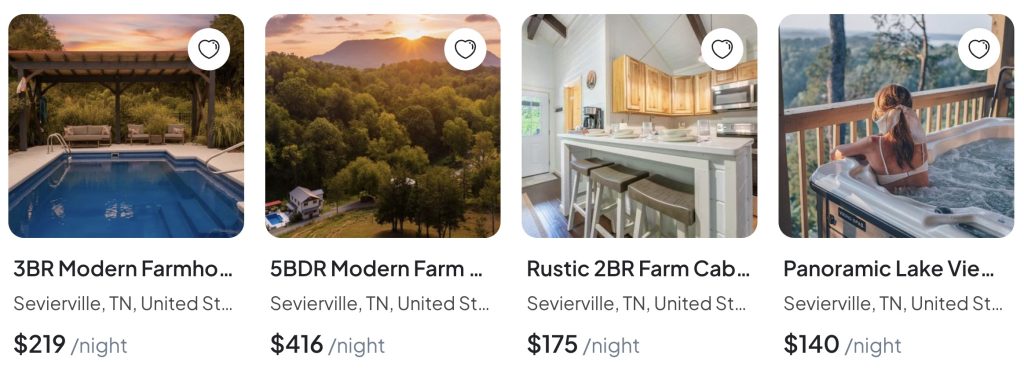
Pigeon Forge vacation rentals fall into three distinct zones, each with its own character and trade-offs.
The Parkway Corridor
The central strip puts every dinner show, attraction, and restaurant within a short walk or trolley ride. It is the right base for groups with young children who need low-friction logistics between activities and the Parkway. Vacation rentals here tend toward condominiums and smaller cabins with access to resort-style pools; typically $150–$300 per night for a two-bedroom. Noise from the Parkway is a factor on summer nights.
Wears Valley Road
Branching west toward the quieter side of the national park, this corridor offers wooded seclusion within a 10-minute drive of the Parkway’s attractions. It suits couples and smaller groups who want deck views, privacy, and morning birdsong alongside evening access to the strip. Cabins here run $200–$450 per night for two to four guests; hot tubs and mountain-facing porches are standard.
Douglas Lake Shoreline
The lake corridor suits larger groups who want genuine water access and distance from the entertainment district. Properties here typically sleep 8–20 guests and include seasonal dock access, game rooms, and decks over the water. Ideal for reunions, multi-family bookings, or anyone who wants to organize days around the lake and evenings at the Parkway. Rates typically $450–$1,200+ per night depending on group size and season.
Browse current vacation rental availability in Pigeon Forge — from ridge-top one-bedroom cabins to Douglas Lake lodges sleeping twenty.
By the time the Great Smoky Mountain Wheel stops its rotation and the fountain at The Island goes dark, Pigeon Forge has already made the argument for a return visit. The mountains are patient about this — the same ridge that sat blue-grey above the Parkway in the afternoon is black velvet by nine o’clock, and the Pigeon River below the Old Mill bridge sounds exactly the way it did when the forge still ran. It is the kind of place that persists past its own noise.
From a cabin porch above the treeline on the Wears Valley side, with the Smokies holding their shape in the dark, the drive home feels, as it always does here, slightly premature.