
Fall Is the Editor’s Choice, But Summer Built This Place
Come in September — that is the honest answer, and if you read nothing else here, act on it. The window between Labour Day and Canadian Thanksgiving delivers Muskoka’s full natural spectacle — the maples along Lake Rosseau turning copper and amber, the lakes still warm enough to swim, the docks quiet enough to hear the loons — at prices that reflect a shoulder season rather than the peak demand that governs July.
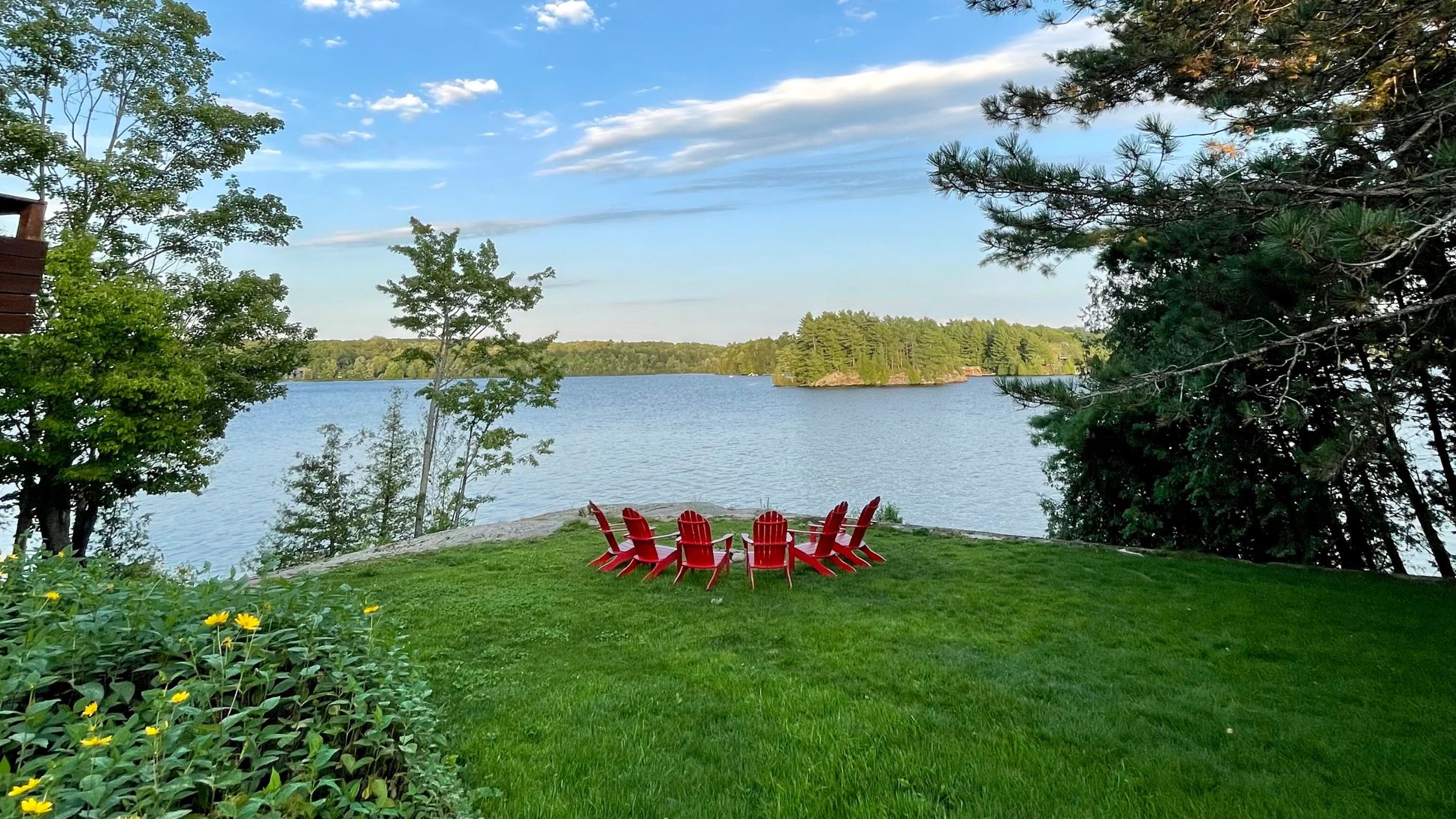
Muskoka’s big three lakes, Lake Muskoka, Lake Rosseau, and Lake Joseph, form one of Ontario’s most storied cottage landscapes: a terrain of exposed Canadian Shield granite, white pine, and deep cold water that has drawn Toronto families north since the Victorian era.
The emotional register here is unhurried, particular, and slightly elegiac — the kind of place that gets into people and doesn’t leave. Summer makes the louder argument, suited to first-timers and families with school-year constraints, and it earns its case.
Muskoka By Season
| Season | Temperatures | Know Before You Go |
| Summer (June–August) | 25–28°C (77–82°F) | Heavy snowfall is typical of the Muskoka–Parry Sound region, and lakes that freeze solid by January. A narrow traveler type — the sauna-and-silence seeker — is genuinely well served. Most seasonal businesses operate on reduced hours or close entirely; verify before travelling. |
| Fall (September–November) | 18–22°C (64–72°F) in September; 2–5°C (35–41°F) by November | Foliage peaks in early October, turning the shorelines of Lake Joseph and Lake Muskoka burgundy and gold. After Labour Day, crowds thin sharply and rental prices follow. |
| Winter (December–February) | −15 to −20°C (5 to −4°F) | March is mud season without apology — roads soften, residual ice lingers on Lake Muskoka until late April, and the region operates in a transitional quiet. By May, the birches have leafed out, and Victoria Day weekend marks the unofficial reopening of cottage country. Prices are at their annual low. |
| Spring (March–May) | -8°C to 18°C (18°F to 64°F) | March is mud season without apology — roads soften, residual ice lingers on Lake Muskoka until late April, and the region operates in a transitional quiet. By May, the birches have leafed out and Victoria Day weekend marks the unofficial reopening of cottage country. Prices are at their annual low. |
Fall at Muskoka
The Season Locals Wish More Visitors Would Discover
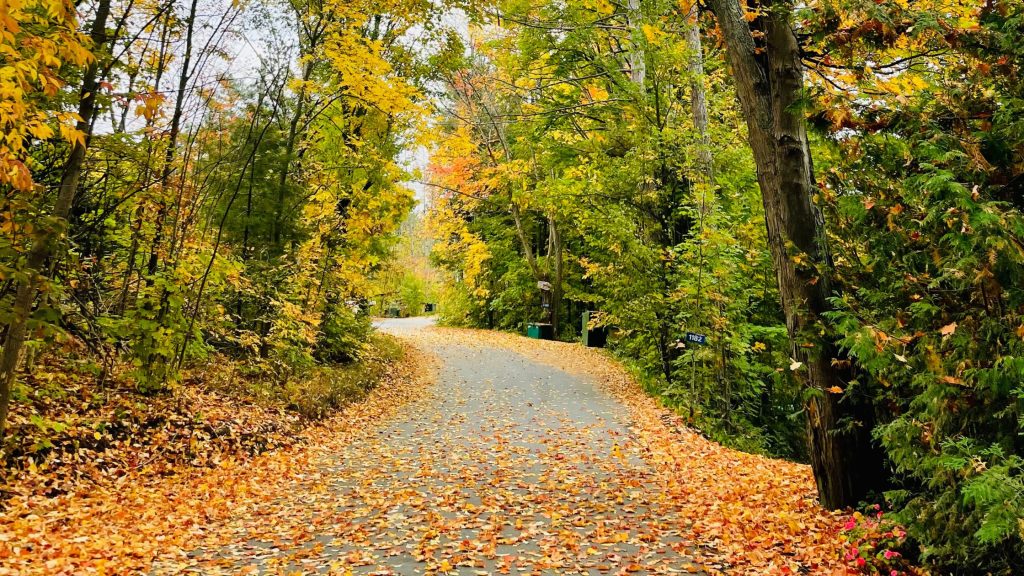
Why you want to come now. There is a specific quality of afternoon light in October on Lake Rosseau — low, amber, arriving at an angle that turns the water the colour of old bronze — and it belongs entirely to those willing to come after the summer season has ended. September and early October offer Muskoka’s full infrastructure at off-peak prices: rental rates drop 30–40% from their July highs, restaurants have room, and the region’s character, unhurried, rooted, and quietly beautiful, reasserts itself without competition. For travelers who missed the booking window for summer or simply prefer the pace of a quieter lake, this is the season that rewards.
What you’ll actually do. Huckleberry Rock Lookout Trail near Bracebridge (approximately 5 km return, moderate elevation) delivers sweeping views across the boreal canopy in full colour through the first week of October. On the water, Algonquin Outfitters in Huntsville rents canoes and kayaks for access to the quieter channels between Lake Rosseau and Lake Joseph — the September water temperature still sits around 18–20°C, swimmable for those inclined. The drive along Muskoka Road 3 between Windermere and Port Carling, where Lake Rosseau narrows toward Lake Joseph, is among the better leaf-peeping routes in Ontario and requires no planning beyond leaving the cottage.
Key events. The Muskoka Arts & Crafts Fall Show, typically held in October in Bracebridge, draws regional makers and artisans and easily supports a long-weekend itinerary. Lake of Bays Brewing in Baysville runs fall harvest taps through September and October — worth the forty-minute drive from Huntsville for the seasonal releases. The Muskoka Novel Marathon, held annually in September, gives the literary-minded a legitimate reason to stay in one place for a full weekend.
Accommodation reality. A four- to six-person waterfront cottage rental on Lake Rosseau or Lake Joseph runs approximately $400–$700 per night in September, compared to $800–$1,400 for equivalent properties in July. The JW Marriott The Rosseau Muskoka Resort & Spa sits at the high end in shoulder season from around $350–$500 per night. Book fall midweek stays three to four weeks out. Canadian Thanksgiving weekend — typically the first or second weekend of October — books six to eight weeks in advance and should be treated like a summer-long weekend.
The honest trade-off. The lakes are swimmable in September and cooling through October — by mid-month, most guests are on the dock rather than in the water. Boat rentals wrap up around Thanksgiving; after that, lake access means paddling your own kayak or canoe.
Summer at Muskoka
The Classic Season, Honestly Assessed By Someone Who Lives Here
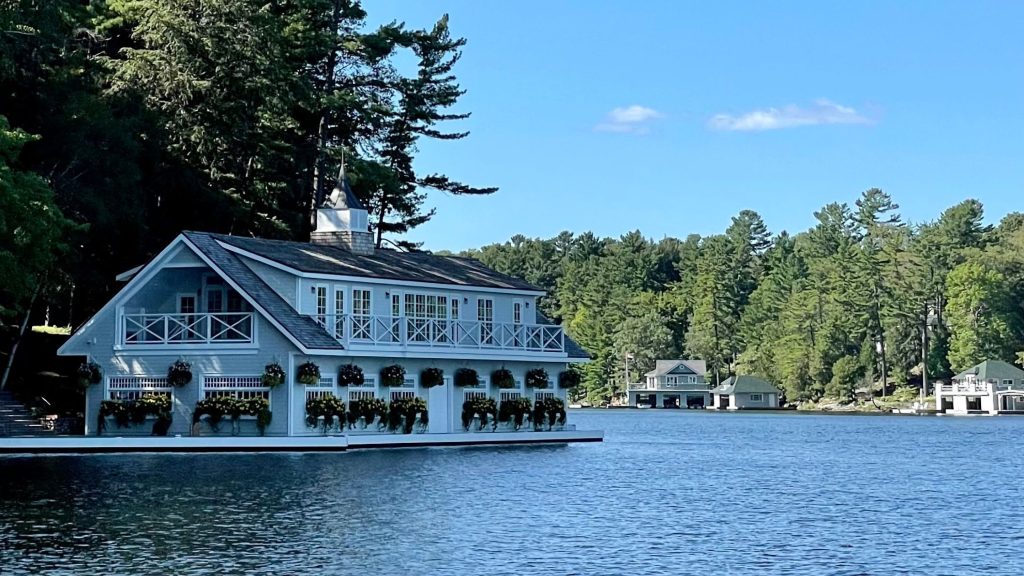
The reason to visit Muskoka in the summer. July and August are what Muskoka was designed for — generous days that hold light past 9 p.m., all three lakes operating at full social intensity, the marinas busy, and the kind of summer that families will reference for a decade. June is the season’s underappreciated entry: the black flies that are notorious in May typically thin by mid-June, the water warms gradually through the month, and weekend traffic hasn’t yet reached its August pitch. Families with school-year schedules have no other reasonable option, and they need no apology for the choice.
What you’ll actually do. Lake Muskoka‘s open water suits sailing, wakeboarding, and powerboating; Muskoka Boat & Canoe in Gravenhurst offers half- and full-day rentals on the main lake. Hardy Lake Provincial Park near Huntsville — less trafficked than nearby Arrowhead — runs a 3.5-kilometre loop with a swimming lake at the far end: quieter than Arrowhead on a July weekend, better for families who want water without a crowd. For something away from the shoreline, horseback riding through Muskoka’s pine-and-granite interior trails, available through outfitters near Bracebridge, gives a landscape perspective the exclusively lake-focused visitor typically misses.
Key events. Canada Day (July 1) brings fireworks over Lake Muskoka from Gravenhurst’s waterfront — arrive by 8 p.m. to claim a dock-side position. The Gravenhurst Farmers’ Market runs on Thursdays through July and August, with a focus near the waterfront and reliably good for local produce and preserves. Santa’s Village in Bracebridge runs June through August and anchors family itineraries for the July school holiday period in a way that few other regional attractions can.
Accommodation reality. Peak waterfront pricing on Lake Joseph or Lake Rosseau runs $900–$1,800 per night for a rental sleeping six, with architect-designed properties reaching considerably higher. Muskoka Bay Resort near Gravenhurst offers a golf-and-lake package from approximately $280 to $450 per night. Book July and August weekend stays four to five months out — by February if you want a specific property on a specific lake. Properties on Lake Rosseau’s western shore book fastest.
The 400 turns into a parking lot. August, specifically, can feel like a Toronto neighborhood that has temporarily relocated north, with cars backed up on the 400, forming what you’d be forgiven for mistaking as a parking lot. Highway 400 northbound on Friday evenings between 4 p.m. and 8 p.m. requires either patience or a much earlier 12:00 noon departure.
Winter at Muskoka
Worth It If You’ve Come for the Ice and the Silence
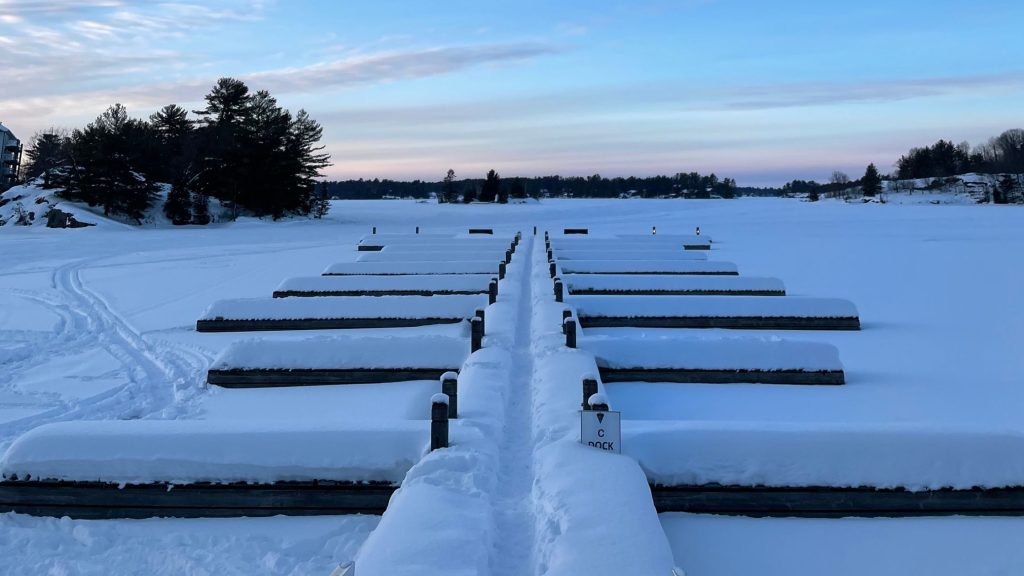
The traveler who winters in Muskoka suits is a specific one: someone who wants a wood-burning sauna, a snow-covered dock, a frozen lake, and very few other people within earshot. December brings the first serious ice to the shallower bays; by January, Lake Muskoka and Lake Joseph freeze reliably solid, and the Muskoka Sauna Co. — which operates year-round — becomes the most sensible destination in cottage country. The ritual of a lakeside heat session followed by a roll in February snow has genuine appeal for those inclined toward Scandinavian cold-weather logic.
Arrowhead Provincial Park near Huntsville opens its 1.5-kilometer illuminated skating trail through old-growth forest in winter — one of the more singular experiences in Ontario regardless of season. Most seasonal restaurants and all boat rental operations close between November and April; the Sherwood Inn on Lake Joseph and the JW Marriott The Rosseau Muskoka Resort & Spa maintain year-round operations and serve as the practical anchors of a winter visit.
The Muskoka–Parry Sound region accumulates significant heavy snow in January and February — keep winter tires fitted, check secondary road conditions before departure, and hold the itinerary loosely.
What to Know Before You Go
Getting There
Muskoka sits roughly 90 minutes north of Toronto via Highway 400, continuing onto Highway 11 through Barrie toward Bracebridge and Huntsville. The nearest regional airport is Lake Simcoe Regional (YLS) in Barrie, though the overwhelming majority of visitors drive. Summer and fall Friday-afternoon construction delays along the Highway 400–11 corridor can extend that drive to two and a half hours; a 2 p.m. departure or a Saturday morning arrival meaningfully changes the experience.
Where to Stay
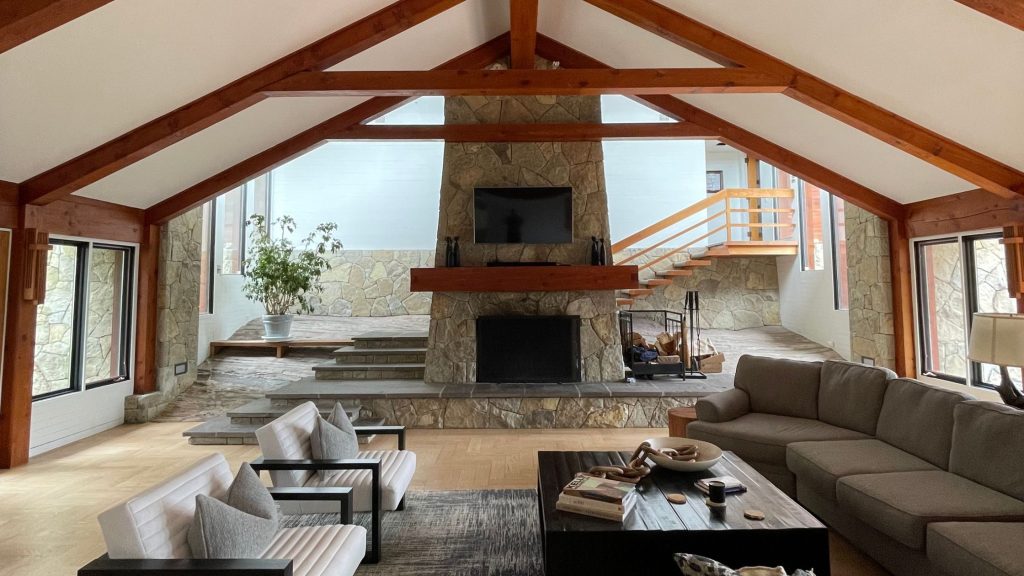
Waterfront vacation rentals span the full range, from rustic A-frame cottages on quieter arms of Lake Muskoka ($200–$350 per night off-peak) to fully equipped architect-designed properties on Lake Joseph ($1,500-plus per night at peak). Cottages on Lake Rosseau’s western shore consistently offer the strongest sunset exposure and the shortest access to Port Carling. For hotel stays, the JW Marriott The Rosseau Muskoka Resort & Spa delivers full-service resort luxury with direct lake access; the Sherwood Inn on Lake Joseph offers a more intimate, traditionally Canadian counterpoint. Both maintain year-round operations, which matters in winter and early spring.
Booking Lead Times By Season
For peak summer weekends in July and August, book four to five months out — by February for prime waterfront properties. Fall Canadian Thanksgiving weekend requires six to eight weeks’ notice and should be treated with the same urgency as summer. A fall midweek stay in September can typically be secured three to four weeks in advance. Spring and winter offer the most spontaneous flexibility: one to two weeks outside of holiday weekends, and often shorter notice for midweek availability.
What Cottagers Know About Muskoka
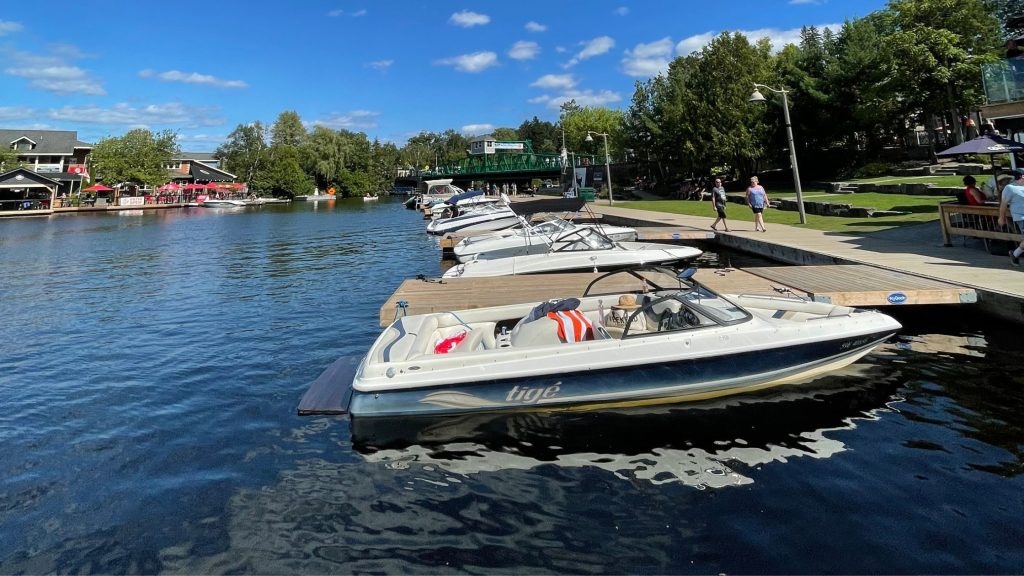
The local move. The public boat launch at Rosseau village on Lake Rosseau gives access to the lake’s quietest northern arm — the stretch that rental boat operators rarely direct guests toward. Bring a kayak or canoe and launch before 9 a.m. in September; you will have the water to yourself in a way that is genuinely difficult to find in this region in summer.
Don’t overlook. Muskoka Brewery in Bracebridge — one of Ontario’s pioneering craft operations, established in 1996 — offers tours and taproom tastings that make the detour worthwhile. Most visitors default to Huntsville’s breweries in Muskoka without realizing the original operation sits a short walk from Bracebridge Falls and is significantly less crowded than its reputation suggests.
Skip this. The Port Carling locks on a long weekend afternoon in August: worth seeing once, a traffic exercise the second time. Come on a Tuesday morning in September instead — the boats still pass, the lockmasters are unhurried, and there is no queue for parking.
Practical logistics. Cell coverage across Muskoka is inconsistent; Rogers and Bell maintain better rural reach than Telus on the secondary roads east of Lake Joseph and north of Lake Rosseau. Download offline maps before leaving the highway. Several farmers’ market vendors, the Port Carling boat tours, and smaller kayak rental operators operate cash-only — carry some.
By six in the morning on Lake Rosseau in early October, the water is a flat pewter, and the mist sits a meter above the surface, drifting without direction. There is no sound that doesn’t belong there — a loon, eventually, and nothing else.
A waterfront rental on any of the Big Three: Lake Muskoka, Lake Rosseau, or Lake Joseph’s quieter eastern shore puts you closest to that particular quality of morning: the one that explains, without argument, why people have been making this drive north for well over a century.