Big Bear is Best in the Fall, but for Many, Winter is the Favorite Season
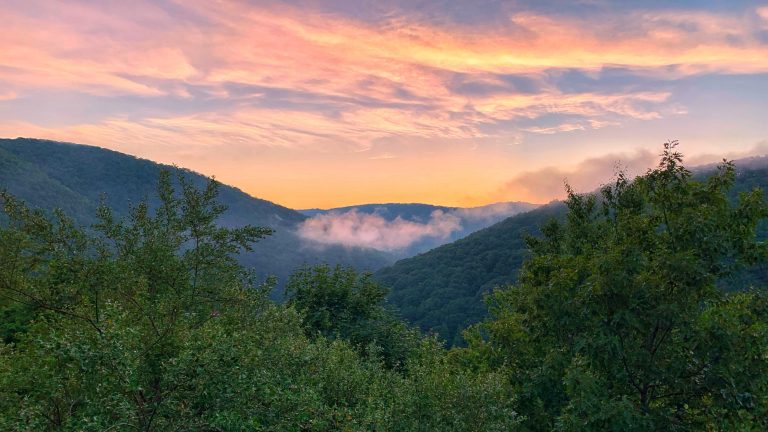
The single best window to visit Big Bear Lake is the six-week stretch from mid-September through late October. Crowds thin, the San Bernardino Mountains pull on their autumn colors — amber oak, gold aspen, deep green Jeffrey pine — and the lake itself turns a steely indigo in the mornings that you simply don’t see in summer.
Sitting at 6,752 feet in the San Bernardino National Forest, about two hours east of Los Angeles via Highway 18 or 38, Big Bear Lake is not a gentle lakeside resort. It is a proper mountain town, year-round and unapologetically so, with two ski resorts, serious mountain biking, and one of Southern California’s most-watched wildlife webcams (Jackie and Shadow, Big Bear’s resident bald eagle pair, have a global following).
If fall isn’t your season, winter is the clear second choice — ski weekends from December through March bring a different energy, and the Big Bear Lake vacation rental scene swells accordingly.
Big Bear Lake by Season
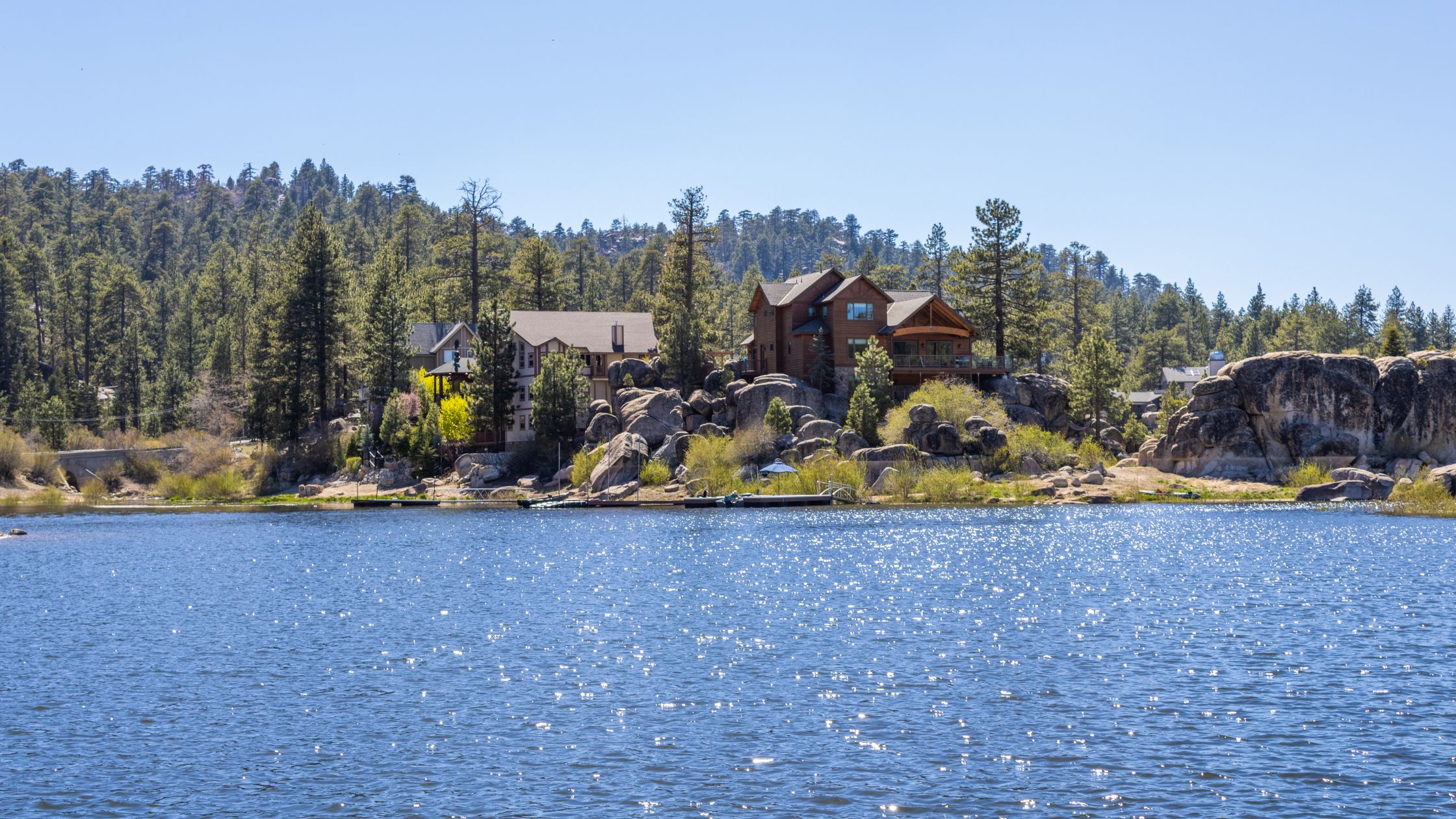
Today, you’ll get a first-hand look at Big Bear Lake, from summer blue water with boat wakes, fall foliage on the north shore, to snow-dusted ski slopes above the frozen shoreline, and the repeating cycle of spring wildflowers on the Bluff.
| Season | Highs | Lows | Know Before Your Go |
|---|---|---|---|
| Summer (June–August) | 75–89°F (24–32°C) | Upper 40s°F (8–10°C) | The lake is busy—boat rentals sell out on holiday weekends, and The Village fills by noon on Saturdays. High elevation keeps temperatures from turning oppressive (a big draw for Los Angelenos). Expect peak prices and the longest wait times of the year. |
| Fall (September–October) | 60–75°F (15–24°C) | 35–45°F (2–7°C) | Shoulder season that doesn’t feel like a compromise. Oktoberfest runs weekends from early September through early November; foliage peaks mid-October. Crowds thin noticeably after Labor Day. |
| Winter (November–March) | 40–55°F (4–13°C) | Regularly below freezing; occasional plunges to 14°F (-10°C) | Snow Summit and Bear Mountain typically open by mid-December. Second busiest season, especially on ski weekends. Check Big Bear snow reports before committing to a specific weekend. |
| Spring (April–May) | 55–68°F (13–20°C) | Upper 30s°F (3–5°C) | Wildflowers at Bluff Lake Reserve, fewer visitors than any other season, and cabin prices at their lowest. Access trails may still carry snow into April; Gray’s Peak Trail (closed for eagle nesting) typically reopens in late spring. |
Fall at Big Bear
Shoulder Season Without the Sacrifice
Why You Want To Come Now
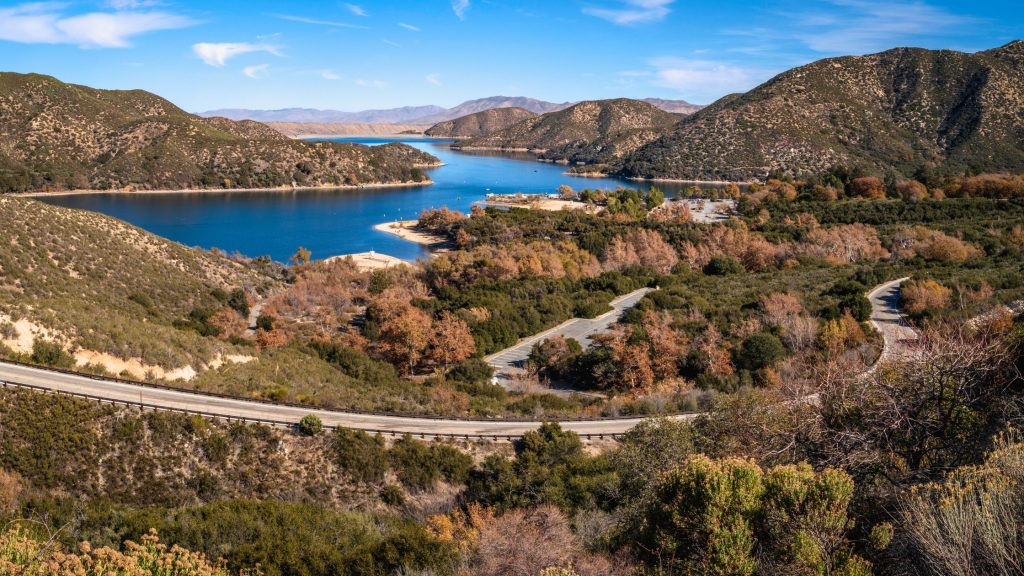
Fall at Big Bear is the rare case where timing genuinely improves almost every aspect of the experience. The summer crowds have cleared, but the lake and trails are still fully accessible, and the weather is still warm enough to be comfortable in a light jacket. Daytime highs run from the mid-60s to mid-70s°F (18–24°C) through September and taper into the 50s°F (10–15°C) by November. The light is different, too — lower in the sky, more golden, hitting the lake at angles that summer’s overhead sun never reaches. This is the season that locals prefer, and it shows in the restaurants and parking lots.
Kara Flietstra, owner of Dank Donuts, ‘the highest donut shop on the West Coast’ (at an elevation of almost 7000 ft!), shared her favorite time of year in Big Bear with us.
“My favorite time in Big Bear is late summer into early fall — especially September. The crowds calm down a bit, the weather is still perfect during the day, and the sunsets start getting extra dramatic. You can spend the morning on the lake, have a perfect afternoon golf game, and still throw on a hoodie at night and sit outside to do some stargazing. It feels like Big Bear exhales a little after summer, and you get the best fall colors starting to show!”
Kara Flietstra , owner, Dank donuts
What You’ll Actually Do
The Cougar Crest Trail (4.8 miles round-trip, moderate, trailhead off North Shore Drive near the Big Bear Discovery Center) is one of the best fall hikes in Southern California — pine and oak forest alternating with high-desert chaparral, steady elevation gain to the Pacific Crest Trail junction, and optional extension to Bertha Peak at 8,502 feet for sweeping views of Big Bear Valley and the high desert.
The Castle Rock Trail (2.5 miles, moderate, trailhead now with dedicated parking at Big Bear Blvd. and Talbot Dr.) is shorter and ends at a granite outcropping with a full panoramic view of the lake. In early fall, Snow Summit opens its Scenic Sky Chair for mountain biking and sightseeing, giving you a chairlift-assisted view of the October foliage at no hiking effort required.
For the bald eagle watchers: fall is when Jackie and Shadow begin their courtship flights and return to their nest above the valley. The Friends of Big Bear Valley Big Bear Eagle Cam runs 24/7 on two cameras — one nest-close, one wide-angle — and while the dramatic hatching season runs late winter, October through December captures the pair’s early-season nest rebuilding and territorial flights. Along the Alpine Pedal Path on the north shore, you may spot eagles soaring overhead in the late afternoon.
Key Events
Big Bear Lake Oktoberfest runs Fridays (October only, 5–11 PM), Saturdays (1 PM–midnight), and Sundays (noon–6 PM) from early September through early November. This is not a theme-park Oktoberfest — the event brings bands directly from Germany, pours the same Munich-brewed beers served in Bavaria, and has run long enough (it’s one of the longest-running in Southern California) to have developed its own traditions and regulars. It’s worth building your arrival date around a Saturday.
The Big Bear Film Festival (historically held in late October) draws independent filmmakers and a genuine film community to The Village theaters — a program worth checking in advance if you want an evening activity beyond the mountain.
The Grizzly 100 MTB/Gran Fondo (typically early September) is one of the premier mountain bike events in Southern California, routing through Big Bear’s backcountry singletrack. If you’re not racing, the event-weekend energy around The Village is worth experiencing even from the sidelines.
Accommodation Reality
Fall shoulder season means Big Bear vacation rentals that sleep 4–6 typically run $200–$350 per night on weekdays, climbing to $300–$500 on Oktoberfest weekends. For October Oktoberfest Saturday nights, book 6–8 weeks in advance. Midweek in late September or early November? Three weeks is usually sufficient. The north shore near Fawnskin offers quieter, often less expensive rentals with easy trail access; the south shore near The Village puts you closer to Oktoberfest on foot.
A Reasonable Trade-Off
You give up the lake. Not completely — you can still kayak or paddleboard through October — but boat rentals thin out as the season winds down, and the big wakeboarding and tubing culture of July is over. If watercraft is your primary reason for visiting, fall is not your season.
Summer at Big Bear
Worth the Crowds If You Plan Around Them
The Case for Coming Now
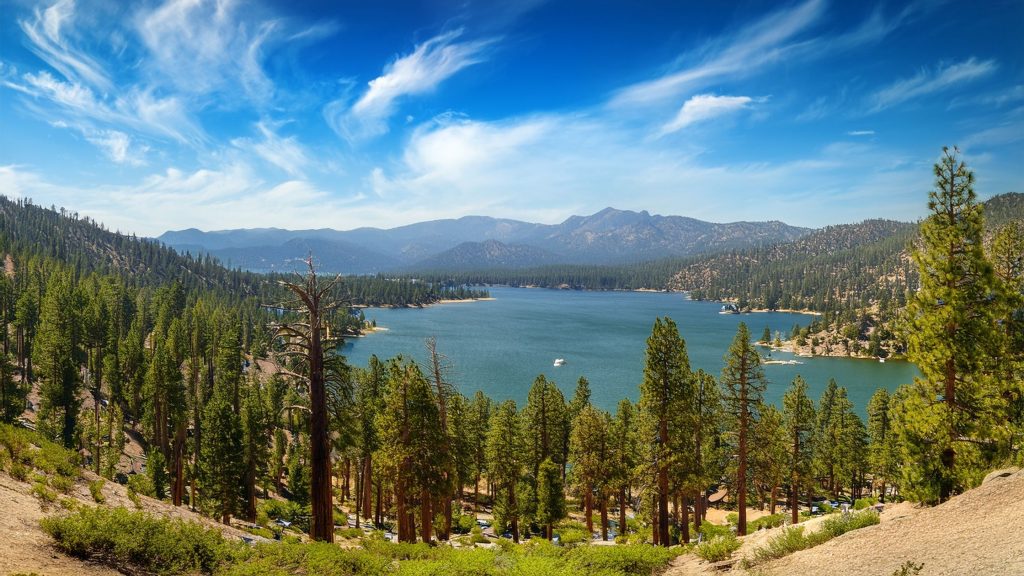
Summer is Big Bear’s most popular season, and with reason: the lake is fully operational, the weather is reliably warm without ever turning Southern California–hot (highs rarely exceed the upper 80s°F/30°C at this elevation), and the range of activities is at its widest. The honest argument for summer is straightforward — if you want to be on the water, this is the window. If you want your kids to swim at Big Bear Marina or Big Bear Resort and Marina, rent a pontoon boat, and spend the afternoon floating, summer is non-negotiable.
What You’ll Actually Do
The lake is the activity. Pontoon boat rentals, kayak and paddleboard launches from Swim Beach, the open-water swim route around Eagle Point — Big Bear Lake itself becomes your destination. On the trail side, the Pine Knot Trail (6 miles round-trip, 900-foot elevation gain, starting from the Aspen Glen Picnic Area off Summit Boulevard) climbs through white fir and Jeffrey pine to Grand View Point at 7,784 feet, where the full lake opens below you. Summer is also when the Big Bear Zoo is most accessible — and when Big Bear family-friendly rentals see the highest demand.
Key Events
4th of July Fireworks Spectacular at Big Bear Lake is one of Southern California’s best-positioned summer holiday events — fireworks over a mountain lake at elevation, reflected in the water, with the surrounding ridgeline as a natural amphitheater. Book a north-shore rental for an unobstructed view without the crowd.
Big Bear LakeFest (historically held in late July or late August, with the 2026 edition scheduled for July 25) is an open-water swim-and-paddle race with live music and a free lakeside concert. The Dooley Classic paddle race and a 1.2- or 2.4-mile open-water swim circuit from Swim Beach to Eagle Point and back make this a proper athletic event, not just a festival. Even if you’re not racing, the event energy around Ski Beach Park is worth an afternoon.
The Music in the Mountains Finale Concert wraps the summer season with outdoor live music — dates vary, so check the Lake.com events calendar for confirmed timing.
Accommodation Reality
Peak summer weekends (July 4 through Labor Day) see vacation rentals for 4–6 guests running $350–$600 per night, with premium lakefront properties commanding higher rates. Book 3–4 months in advance for any holiday weekend; July 4th inventory is often gone by April. Midweek summer stays (Tuesday–Thursday check-ins) can be 20–30% less than weekend rates on the same property. The Big Bear Marina area and south shore properties offer the easiest walk-to-water access.
One Honest Trade-Off
Traffic on State Route 18 and 38 on Friday afternoons in July and August is genuinely bad — not “a little slow” bad, but two-hour-delay bad on holiday weekends. If you’re driving from Los Angeles, arriving Thursday evening or early Saturday morning makes a material difference in the trip.
Winter at Big Bear
Worth It If You Actually Ski
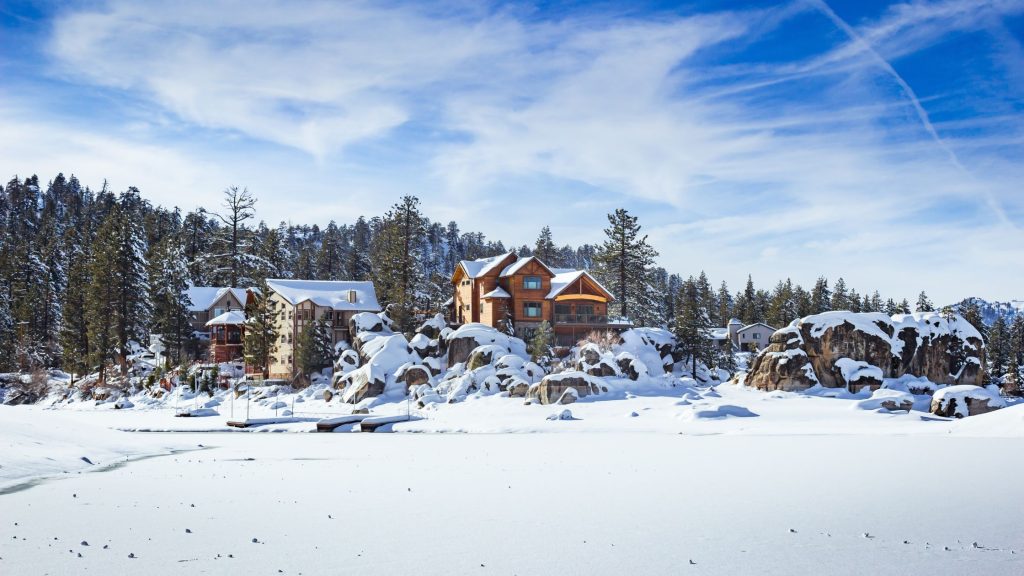
Winter belongs to skiers and snowboarders. Snow Summit and Bear Mountain together offer serious Southern California skiing — Snow Summit historically stays open through mid-April on a strong snow year, Bear Mountain into late April. For anyone not on the slopes, the appeal is narrower: a cozy cabin with a hot tub, snow-play areas for kids, and the experience of a properly snowed-in mountain town.
The eagle cam, run by Friends of Big Bear Valley, becomes must-watch viewing in January and February, when Jackie typically lays her eggs and both eagles can be observed incubating. The bald eagle pair also begins nesting activity in November and December, making winter an underrated season for wildlife watchers who are content to observe via webcam and from the lake’s edge.
The trade-off is significant: winter weekends around Christmas and New Year’s are the most expensive and most crowded period of the entire year, with vacation rental prices averaging $600–$900 per night for properties that sleep six. The ski resort parking situation on peak weekends requires arriving early or using the shuttle system. If you’re not skiing, fall or spring offers most of winter’s coziness at a fraction of the price.
Spring at Big Bear
The Quiet Season That Rewards Patience
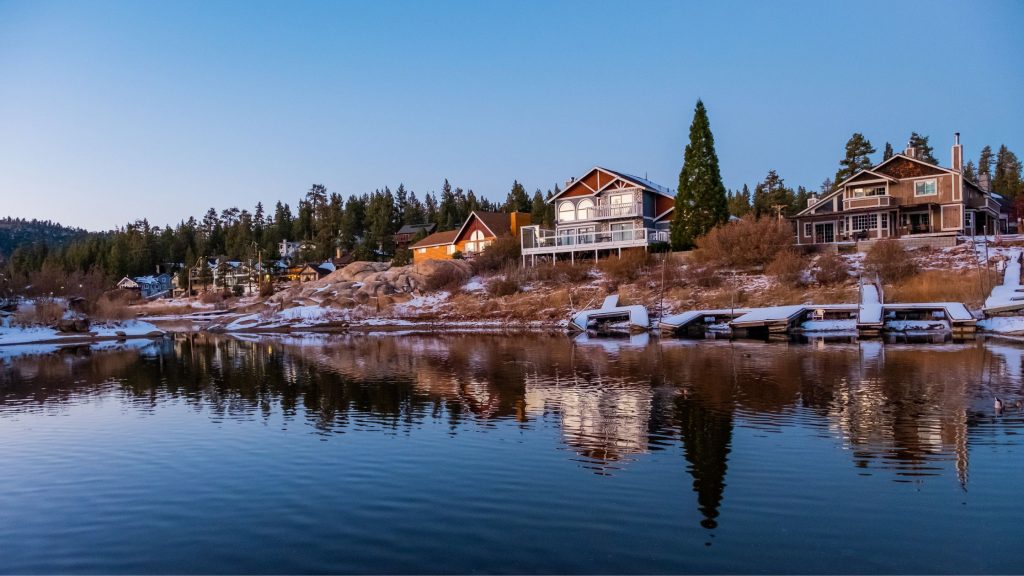
Spring (April–May) at Big Bear is the season for travelers who want the mountain without the mountain’s reputation. Prices are at their annual low — vacation rentals for four to six guests can drop to $150–$250 per night — and midweek availability is essentially open.
What you trade for that quiet is conditions that require flexibility: snow lingers on higher trails into April, Gray’s Peak Trail (one of the area’s best views of the lake) stays closed through the eagle nesting season, and the lake’s boating season doesn’t open until late spring.
What you get is Bluff Lake Reserve (accessible mid-May through mid-November, reached via Mill Creek Road), a 4.5-mile trail through an alpine meadow with wildflowers in full bloom — a genuinely different experience from the summer lake scene, and one that almost no visitor photos capture. The Big Bear Spartan Trifecta race series and the Tour de Big Bear cycling event bring athletic energy to late spring and early summer weekends for those who want an event to anchor their trip.
What to Know Before You Go
Getting There
Big Bear Lake sits 100 miles east of Los Angeles, roughly a 2–2.5 hour drive under normal conditions. The primary routes are State Route 18 (the Rim of the World Highway from San Bernardino, curving and scenic but narrow) and State Route 38 (from Redlands, wider and faster, the preferred route in poor weather). The nearest commercial airport is Ontario International (ONT), about 50 miles west — plan on a 90-minute drive. During winter storms, Caltrans may require chains or snow tires on both routes; check Caltrans QuickMap before departing. The road does not close often, but it does close.
Where to Stay
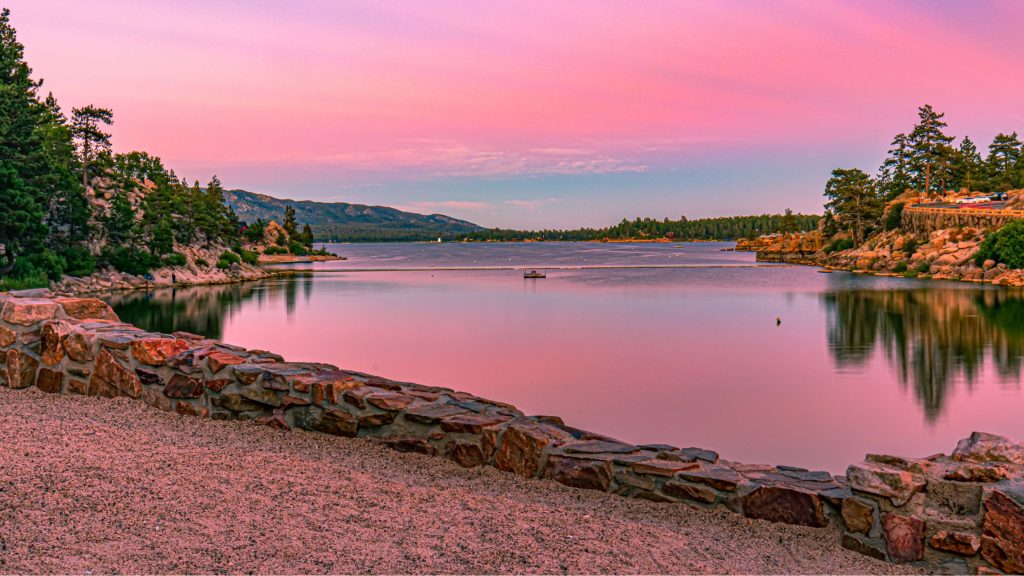
Lake.com’s Big Bear vacation rentals cover the full spectrum, from lakefront cabins on the south shore to forested retreats near Fawnskin on the north. South shore rentals (near Big Bear Village and The Village commercial strip) are best for summer water access and proximity to Oktoberfest. North shore and Fawnskin rentals offer quieter surroundings, easier access to Cougar Crest Trail and the Discovery Center, and generally lower nightly rates. Moonridge-area cabins, near Bear Mountain ski resort, are the logical choice for ski-primary trips in winter. Midrange rentals sleeping 4–6 run approximately $250–$400 per night across most of the year, with significant jumps during peak ski weekends and summer holidays.
Booking Lead Times by Season
For peak summer weekends (July 4, Labor Day) or peak ski weekends (Christmas week, Martin Luther King weekend, Presidents’ Day weekend): book 3–4 months in advance — inventory at these windows is genuinely limited. For a summer midweek stay in June or August, 4–6 weeks is usually fine. For Oktoberfest Saturdays in October: 6–8 weeks.
For fall midweek stays in September or October, 3 weeks is typically sufficient. Spring (April–May) has the most open inventory of any season; last-minute bookings within 1–2 weeks are often possible, and direct booking through local rental managers sometimes yields better rates than platform fees would suggest.
Insider Tips for Big Bear
The local move: The north shore’s Alpine Pedal Path (starting at Stanfield Cutoff, paved, 3.4 miles one-way) is where locals walk in the early morning. It’s where you’re most likely to spot bald eagles soaring low over the water in fall and winter — arrive before 9 AM for the best chance. It’s also one of the few flat, stroller- and bike-accessible routes in a destination that is otherwise all elevation change.
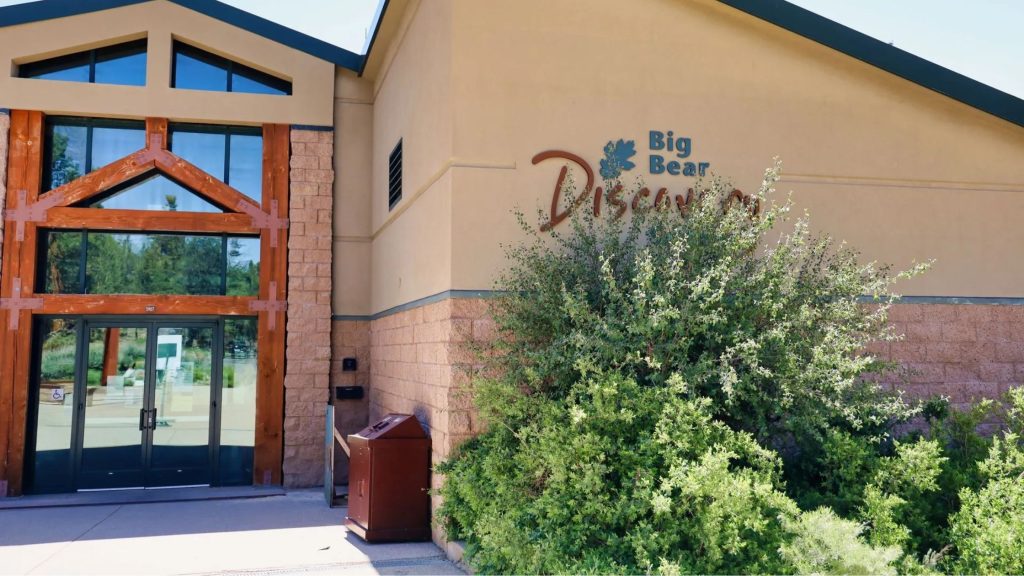
Don’t overlook: The Big Bear Discovery Center on North Shore Drive is one of the most underused resources in Big Bear. Free to enter, it offers trail maps, nature programs, and the only reliable source of current trail conditions (including snow closures on the north shore trails). The naturalist staff will tell you, bluntly, which trails are worth it on your specific day.
Skip this: The Village on Saturday afternoon in July. It is gridlocked with day-trippers by noon, parking is a genuine problem, and the restaurants go from pleasant to overwhelmed. If you’re staying in a lakefront rental, you already have the best seat. Save The Village for a weekday morning breakfast or a Thursday evening.
Practical logistics: Cell coverage in Big Bear is workable in The Village and along Highway 18, but drops out along the north shore (Highway 38) and on many trails. Download offline maps before you leave. Several trail parking areas require an America the Beautiful pass or a daily Adventure Pass ($5, available at the Discovery Center) — Rangers do ticket, particularly on summer weekends.
At The End of the Day
At dusk in October, the lake turns a color that’s hard to name — somewhere between pewter and slate, with the last light catching the white-barked aspens on the north ridge. The bald eagles finish their day flights and settle into their pine. The valley goes quiet in a way that a mountain lake at nearly 7,000 feet does.
A waterfront rental on Big Bear Lake’s north shore puts you closest to that specific hour, when the crowds have thinned, and the mountain reminds you why it drew people up here in the first place.