Big Bear is A Four-Season Alpine Guide to Southern California’s Mountain Escape
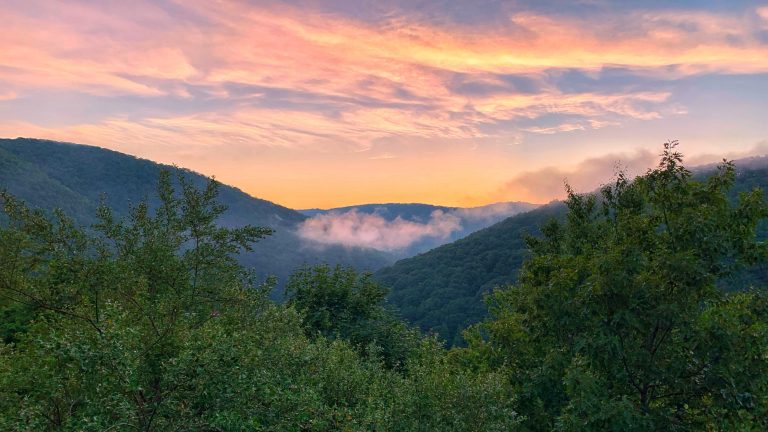
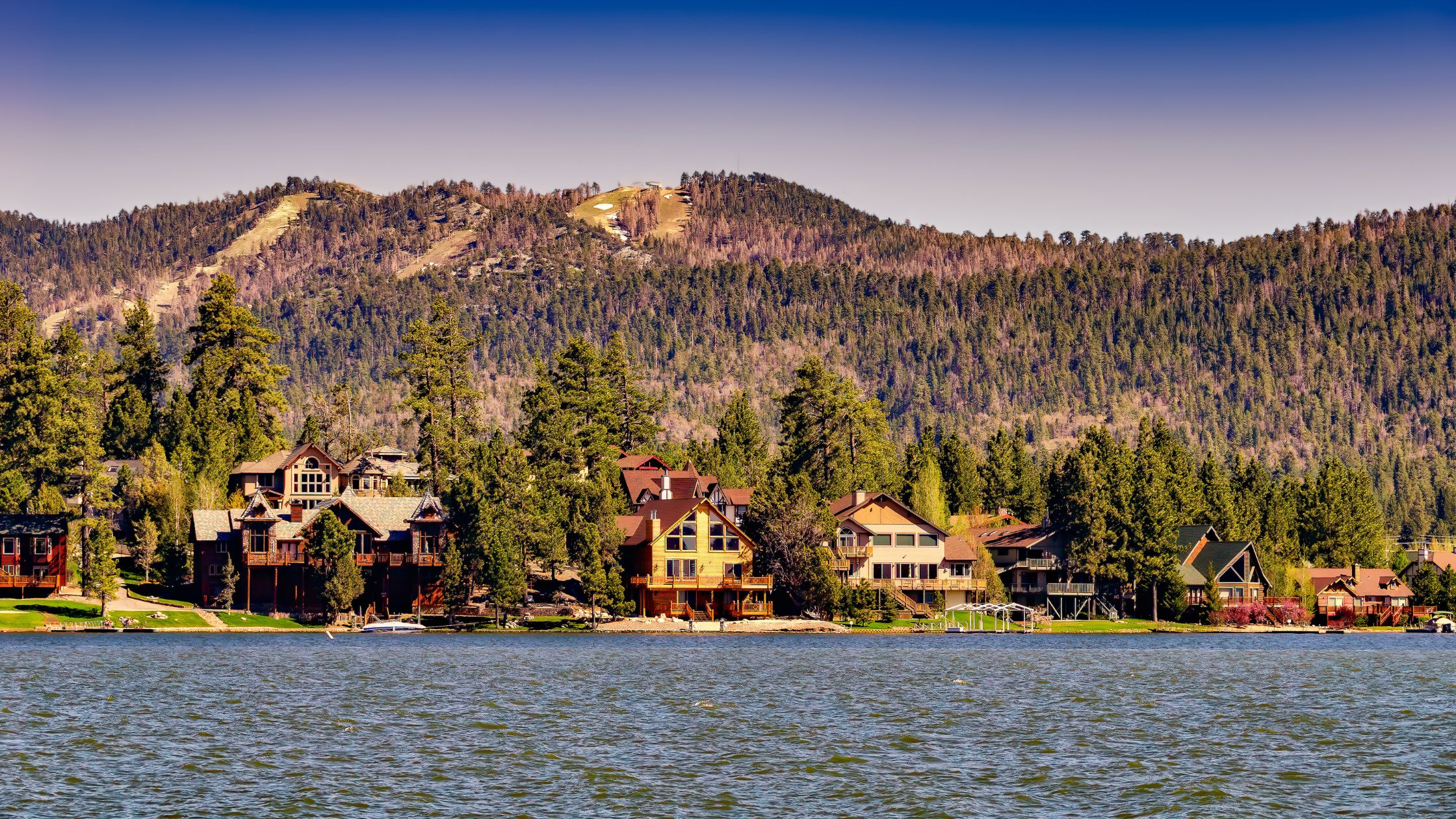
The first thing that hits you isn’t the altitude — though you’ll feel it — it’s the light. At 6,752 feet in the San Bernardino Mountains, the air has a clarity that Los Angeles simply doesn’t offer: pine-filtered, thin, and bright enough on a spring morning to make Big Bear Lake look like a polished mirror set into the high-desert ridgeline.
In April, wildflowers are just beginning to color the trailheads. The lake has refilled from snowmelt. The ski lifts that ran through March are being converted into scenic chair rides and mountain-bike gondolas; they’ll be so by June. This is an in-between moment, which somehow makes it feel like the most honest version of the place.
Big Bear earns a long weekend in every season — and the case for that gets built throughout this guide. You’ll find the essential experiences that anchor any first trip, the outdoor life of a seven-mile alpine lake surrounded by San Bernardino National Forest, the indoor options that keep a visit viable when the weather turns, and a handful of places locals don’t bring up unless you ask the right questions.
Whether you’re arriving with your mountain bike loaded, a dog in the back seat, a group of fourteen relatives who need somewhere to eat, or a cabin reservation and no agenda beyond a good sunset, the question isn’t whether there’s enough to do in Big Bear — it’s how much you can fit in two and a half days.
The Essential Experiences
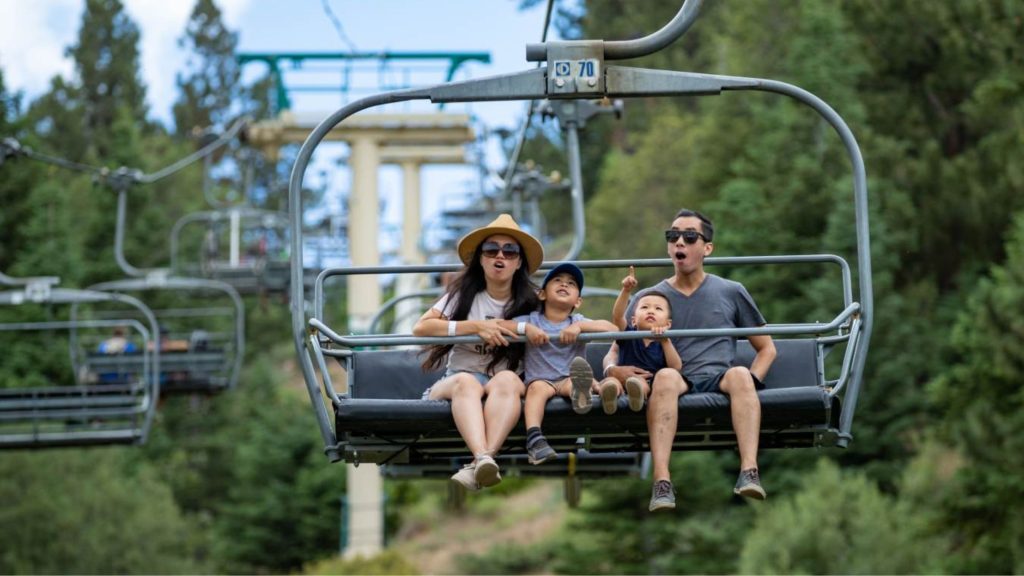
Snow Summit’s Scenic Sky Chair earns its place on every list because the 8,200-foot panorama it delivers is difficult to prepare for, even coming from the coast. Available June through October, the 12-minute lift ride deposits you at a summit with views of the full lake below, the desert floor to the north, and the San Gorgonio range to the south. Tickets run approximately $30 for adults. The payoff works whether you ride immediately back down or connect to a hiking or biking trail — but the final thirty minutes before the last lift, when alpenglow hits the valley, is when the view earns its highest marks.
Big Bear Alpine Zoo isn’t the zoo you’re expecting. One of only two alpine zoos in the United States, this Moonridge facility specializes in rehabilitating and releasing local wildlife and provides a permanent sanctuary for animals that cannot be returned to the wild. Residents include grizzly bears, mountain lions, bald eagles, gray wolves, and over 160 animals across 85 species. The open-air walk through the grounds works for the full age range of most groups, from five to eighty-five, and the conservation programming gives it more substance than its ticket price suggests.
Castle Rock Trail is the right introduction to Big Bear hiking: short enough not to require planning, steep enough to require effort. The 2.7-mile out-and-back begins 1.1 miles east of the dam on Highway 18 (use the new 2025 lot at Big Bear Blvd and Talbot Dr). The 500-foot elevation gain happens quickly, and the granite outcrop at the top opens onto a full-width lake view, with Snow Summit visible across the water. Dogs are welcome on leash. Free to hike.
Big Bear LakeFest, held in late August near Pine Knot Landing, is one of those events that draws visitors who weren’t planning to come that particular weekend — live music, watersports demonstrations, craft vendors, and an open lakefront that feels like a proper summer sendoff. Check the Lake.com LakeFest event page for current dates and details.
The Alpine Pedal Path runs 2.5 miles along the north shore and is fully paved, with open lake views for most of its length. It’s one of the few lake-level options in Big Bear that works equally well for strollers, walkers who prefer flat ground, inline skates, and cruiser bikes. The stretch near the Big Bear Discovery Center is the most open and scenic. A slow hour here on a weekday morning beats a rushed afternoon almost anywhere else in the valley. Free.
Big Bear Oktoberfest runs Saturdays and Sundays in October at the Convention Center, drawing visitors from across Southern California for live German music, stein competitions, and an event that’s been running long enough to feel genuinely local rather than manufactured. Lake.com’s Oktoberfest event page has the current dates and ticketing information.
Outdoor Activities Around Big Bear Lake
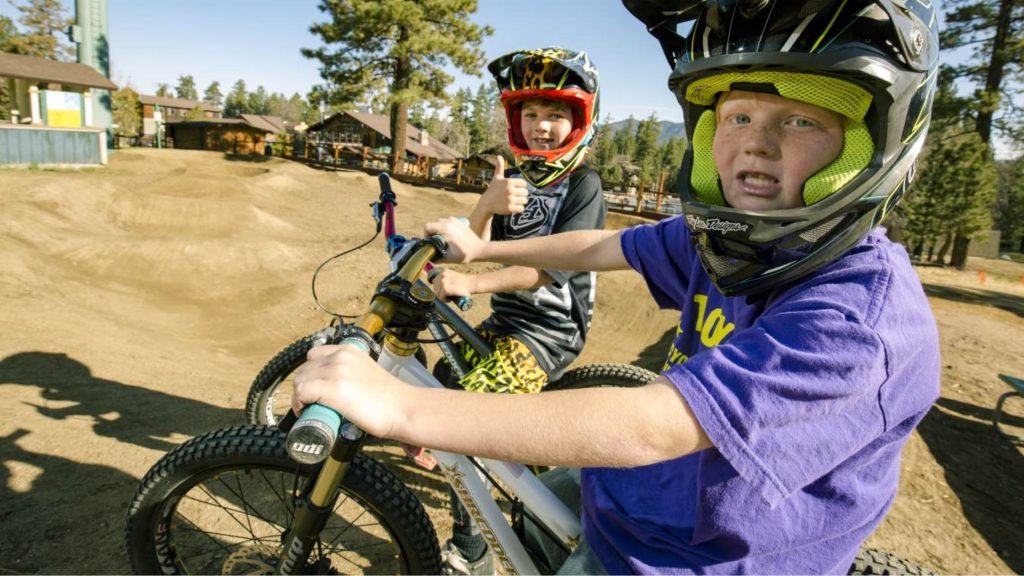
Big Bear Lake sits at the center of a broader outdoor system — seven miles of open water bordered by San Bernardino National Forest on every shore, with over 100 miles of trails in the surrounding mountains. The lake itself is a reservoir created in the early 1900s when the valley was dammed, which makes it deeper and more consistent than the natural alpine lakes that dot the surrounding ridges. The local rhythm: early on the trails before heat builds, afternoon on the water, evenings in the Village.
There’s nothing like pedaling around town to get a real sense of place. Kara Flietstra, owner of Dank Donuts, enjoys cruising the Alpine Pedal Path.
“One of my favorite Big Bear days is grabbing coffee and breakfast early, taking a sandwich to go, and renting bikes. You can cruise the Alpine Pedal Path to Juniper Point for lunch and a view. Right around noon, you can usually see the eagles flying over the lake from there.”
kara flietstra, owner, Dank donuts
On the Water
Big Bear Marina and Pine Knot Marina (439 Pine Knot Ave) anchor the south-shore rental scene, offering pontoons, fishing boats, kayaks, and paddleboards, with typical daily rates from $60–$200 depending on the vessel. Big Bear Watersports, also near Pine Knot, offers jet ski rentals, wakeboarding, waterskiing, and a floating inflatable waterpark that books out by Thursday for summer Saturdays. Call ahead or reserve online.
Fishing is taken seriously here. The California Department of Fish and Wildlife regularly stocks Big Bear Lake with trout, and bass fishing is year-round. A California fishing license is required and can be obtained at local sporting goods stores or online.
The annual Fishin’ for $50K Trout Tournament (typically early June) releases five tagged trout worth $10,000 each into the lake and is open to all ages and experience levels. Boating season generally opens in late April and runs through October. Most private rentals accommodate leashed dogs at the operator’s discretion — ask when booking.
Hiking and Trails
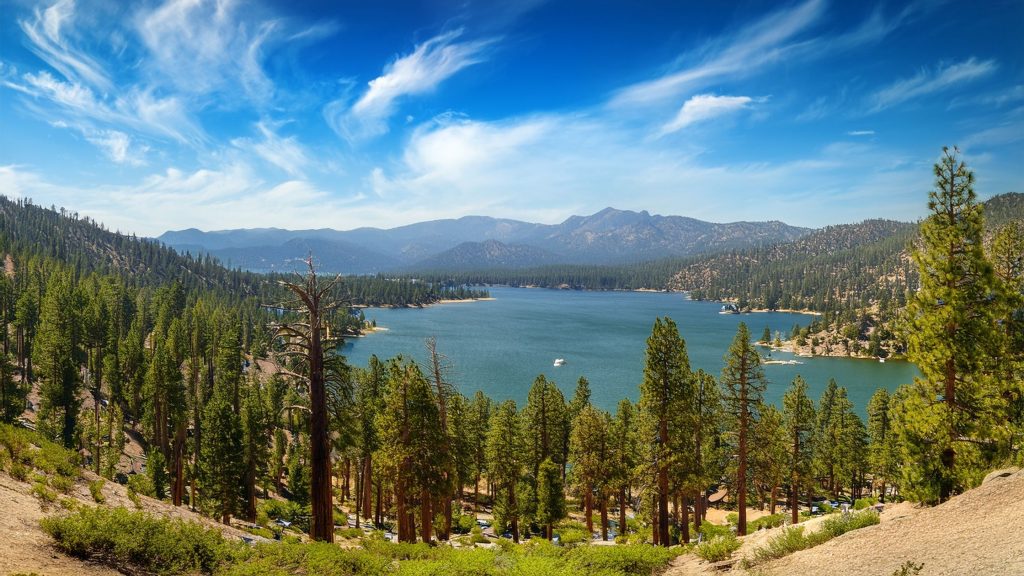
Cougar Crest Trail (4.8 miles round trip, moderate, 720 ft gain) is the valley’s other essential hike, and it’s arguably the more rewarding of the two. Starting 0.6 miles west of the Big Bear Discovery Center on North Shore Drive, the trail climbs steadily through pine and oak forest before opening to panoramic lake views around mile two. The trail ends at a junction with the Pacific Crest Trail — continue an additional 0.8 miles on a steep maintenance road to Bertha Peak at 8,502 feet for a 360-degree view of Big Bear Valley, the high desert, and the full San Bernardino range. Dogs are welcome on leash; bring enough water for both of you. Adventure Pass required for parking.
The Woodland Trail (1.5 miles, easy, minimal gain), one mile east of the Discovery Center on Highway 38, is the right choice when the group includes younger children or walkers who prefer flat ground. A self-guided pamphlet is available at the trailhead; the trail passes through pinyon-juniper and mixed-conifer zones with interpretive stops along the way. Free; trailhead parking available.
Pine Knot Trail gets heavy weekend traffic for its reputation, but the trailhead parking is genuinely difficult, and the trail doesn’t offer views that compete with Castle Rock or Cougar Crest for the effort. Save it for an uncrowded weekday if you’re curious.
Scenic Drives and Lookouts
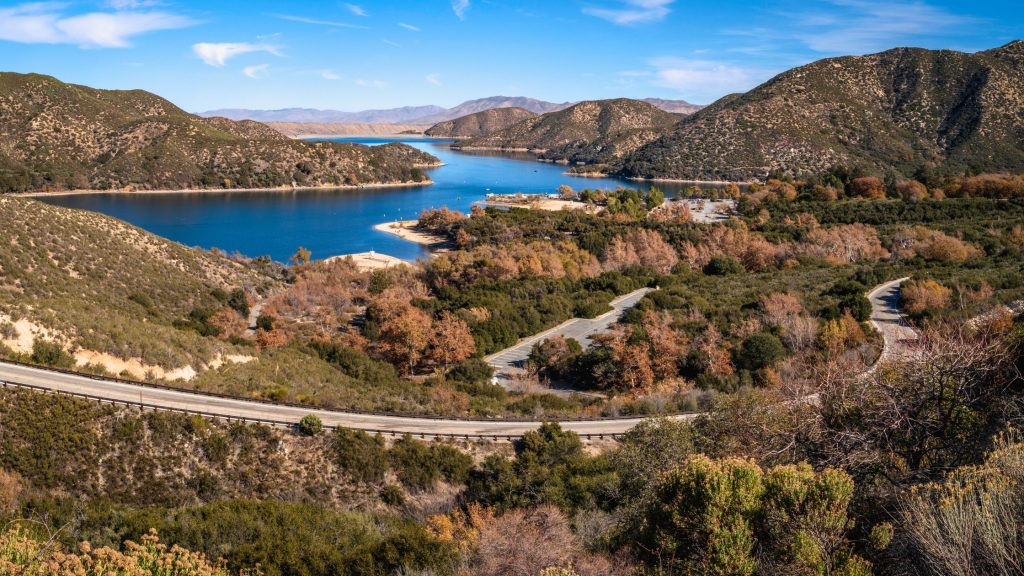
The Rim of the World Scenic Byway (Highway 18) is the reference drive. Coming from the San Bernardino valley floor, the road climbs nearly 5,000 feet over 25 miles, with pull-outs overlooking the inland valleys and eventually Big Bear Lake itself as you descend from the west. The highest point — Onyx Summit at 8,443 feet, about 15 miles east of the Village toward Twentynine Palms — is the most compelling reason to use the eastern exit as a scenic return route rather than retracing your approach. Plan 45–60 minutes each way without stops.
Boulder Bay Park, on the south shore near the Village, is the most accessible lake-level viewpoint in the valley — no elevation gain, free parking, and a north-facing orientation that catches the best late-afternoon light on the surrounding ridgelines. Arrive around 4:00 pm in the summer.
Wildlife, Parks, and Open Land
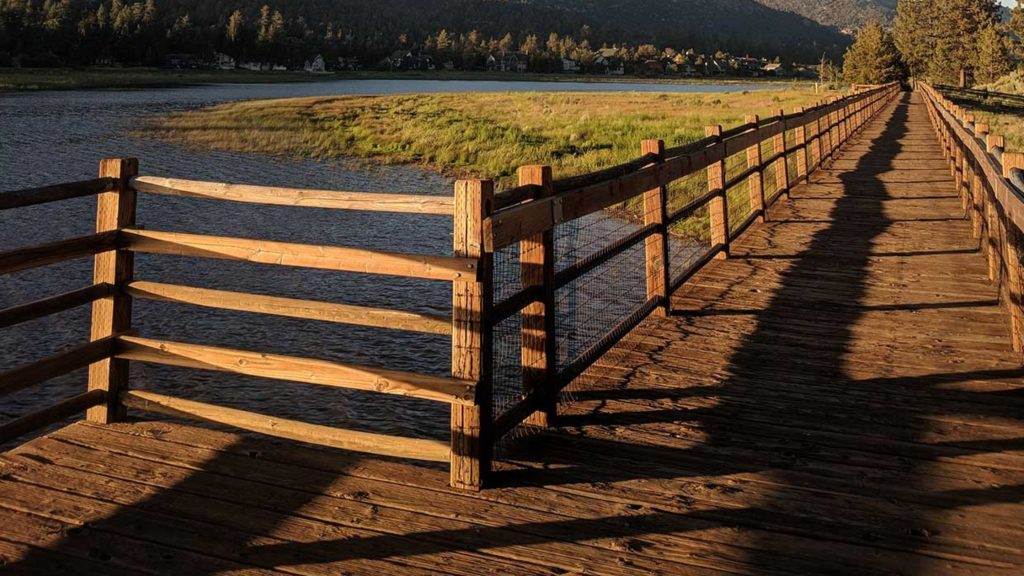
Stanfield Marsh Wildlife and Waterfowl Preserve (free, west end of the lake) is an easy half-mile boardwalk through cattail and open-water habitat, fully accessible and best in the early morning for waterfowl — great blue herons are common, and ospreys appear through the warmer months. It’s one of the only fully flat accessible trails in the valley.
We love the Big Bear Alpine Zoo! From Dank Donuts, its an easy walk. All the animals are rescue animals, and it’s fun getting to know their names and reasons why they are here!
kara flietstra, dank donuts
The bald eagle nesting area on the north shore near Fawnskin is most active from November through April. Friends of Big Bear Valley operates a live eagle cam at the nest site, and the pair has become one of the more quietly remarkable wildlife-watching experiences in Southern California. Gray’s Peak Trail, which passes through nesting habitat, closes seasonally in December through July — confirm status with the Big Bear Discovery Center before planning a winter hike in that corridor.
Indoor and All-Weather Activities
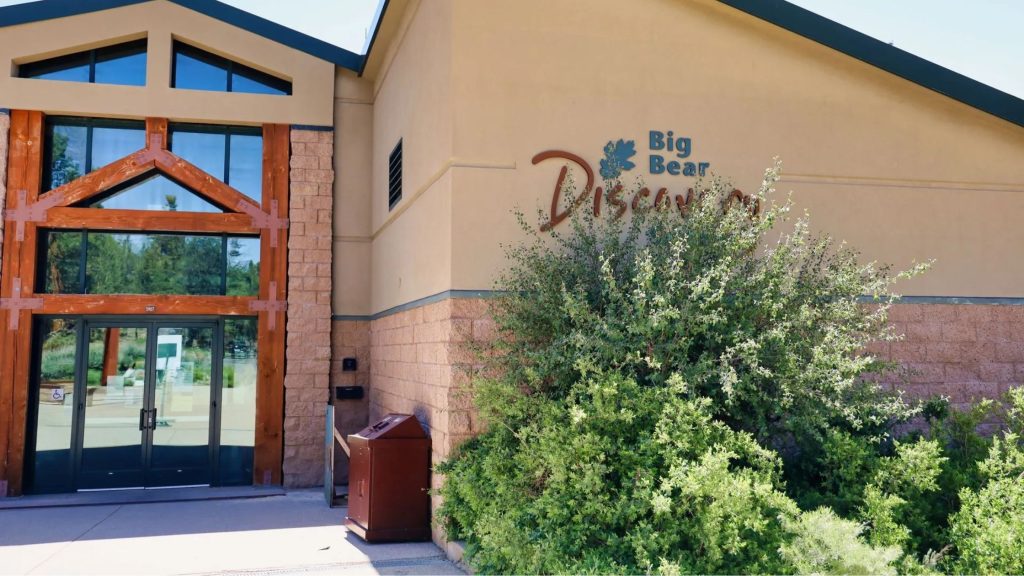
The Bowling Barn (40625 Big Bear Blvd) is the valley’s full-scale indoor rec venue — 16 lanes, a full bar, and a scoring system modern enough to handle a group that doesn’t know how to keep score. It stays busy on winter evenings after the slopes close. Open daily; rates around $5–7 per game.
Action Zipline Tours (41693 Big Bear Blvd) pairs a two-hour, five-line zipline adventure over canyon terrain with a post-ride tasting from over 70 California wines and craft beers. The combination is more intentional than it sounds — the tasting room is a legitimate half-day on its own when the weather closes outdoor options. Operates year-round in suitable conditions.
Big Bear Escape Rooms (40055 Big Bear Blvd, Suite D) runs themed 60–75 minute rooms that scale well for mixed-age groups. Book in advance for weekends.
The Alpine Slide at Magic Mountain (800 Wildrose Lane) offers a bobsled-style slide, go-karts, mini-golf, and a climbing wall — a full afternoon of commercial entertainment that works when the group needs something contained and all-weather. Open year-round, with additional summer and winter attractions.
Pine Knot Village deserves an evening on its own merits, not just as a dining destination. The Thursday concert series at the Village Green runs most weeks through summer — free and open — and the Village’s 120-plus storefronts are walkable enough to carry two hours of casual exploration. A few standouts: the Big Bear House of Jerky for snacks, Saucy Mama’s Pizzeria for a late-night slice, and the Ardent Oso Chocolate experience, which brings a genuine cacao education to an unexpected mountain setting.
Bear Mountain Golf Course (43092 Goldmine Dr) operates May through October at 8,000 feet. The altitude adds significant distance to every shot — plan an extra club on most holes. Rates typically $40–60 for 18 holes.
Historic Sites and Local Heritage
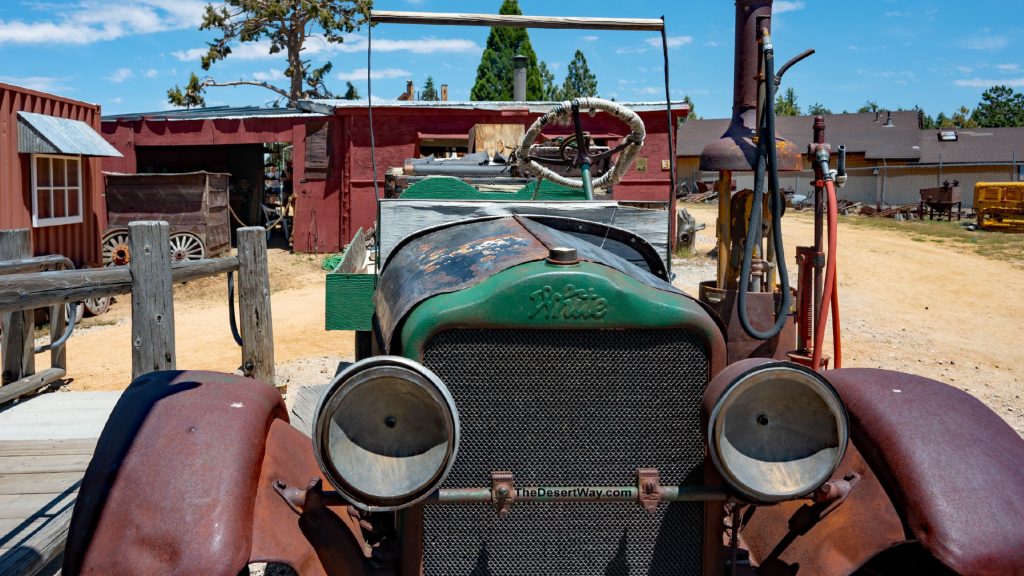
The Gold Fever Trail in Holcomb Valley is a self-guided driving tour through the site of Southern California’s largest gold rush. In 1860, a hunter named William Holcomb tracked a wounded grizzly bear north of Big Bear Lake and discovered gold in a creek — word spread fast enough that within months, 10,000 miners had established the short-lived town of Belleville, briefly one of the most populous settlements in California.
What remains today is a haunting landscape of weathered cabin ruins, a gold-rush-era cemetery, and abandoned mine sites accessible by narrated loop. Pick up the tour brochure at the Big Bear Discovery Center (40971 North Shore Dr, Fawnskin), open Thursday–Monday, 9 am–4 pm. Free.
Big Bear Valley Historical Museum (800 Greenway Dr, Big Bear City) houses an unusually thorough collection — Gold Rush equipment, vintage ski and snow gear, early local photography, and a replicated blacksmith shop that demonstrates what 19th-century mountain life required. The museum is the right context for understanding the Holcomb Valley landscape before you drive through it. Admission by donation; hours vary seasonally.
The Serrano (Yuhaaviatam) Heritage predates the Gold Rush by more than 2,000 years. The Yuhaaviatam called this valley “Yuhaaviat” — “Pine Place” — and lived here through cycles of seasonal movement long before the first Anglo settlers arrived.
The Eye of God, a sacred quartz dome near Baldwin Lake, remains one of the few accessible landmarks from this period. The San Manuel Band of Mission Indians, the Yuhaaviatam people’s federally recognized tribal government, maintains educational resources and cultural programs at sanmanuel.com.
Big Bear Solar Observatory (40386 North Shore Lane, Fawnskin) is operated by the New Jersey Institute of Technology and houses the world’s largest solar telescope — the 1.6-meter Goode Solar Telescope — on a peninsula in the lake, positioned there specifically because the water’s stabilizing air effect produces unusually clear solar images. Limited public tours run seasonally (typically June–September, alternating Thursdays, 2–3 pm; free admission; confirm at bbso.njit.edu before visiting). The tour covers three flights of stairs and a 1,000-foot walk, and is best suited for visitors aged 10 and up.
Local Picks and Lesser-Known Stops
Grizzly Manor Cafe (41268 Big Bear Blvd) is the restaurant locals are most likely to name without being asked. Breakfast only; opens at 7 am; runs out of the most popular items before noon on weekends. The kitchen treats its food as if it matters — which, in a mountain town with a lot of places that don’t, is notable. Go on a weekday if you can; the wait on Saturday mornings is genuine.
Fawnskin — the quiet north-shore community about twenty minutes from the Village — is worth an evening walk for anyone who’s spent their first day entirely on the south side. The north shore has wider sky, more direct lake access, and a pace the Village simply doesn’t offer. The Big Bear Discovery Center, the Woodland Trail, and the best shoreline view of the Solar Observatory across the water are all here. It’s the part of Big Bear that regulars tend to keep for themselves.
Bluff Lake Reserve (accessible via Forest Road 2N10 off Mill Creek Rd) is a protected high-mountain meadow and lake that most visitors never find. Open mid-May through mid-November, it’s at its most dramatic in wildflower season (late May/early June) and again in October when surrounding aspens turn. Dogs are not permitted inside the reserve. High-clearance vehicles are recommended for the dirt road approach — check road conditions at the Discovery Center before heading out. Free.
The Champion Lodgepole Pine, accessible as a short extension of the Bluff Lake walk, is the largest known lodgepole pine in the United States. It’s about 10 minutes from the reserve parking area, appears in almost no visitor guides, and costs no extra fee to visit. Worth the detour purely for the quiet of finding something that significant with no one else around.
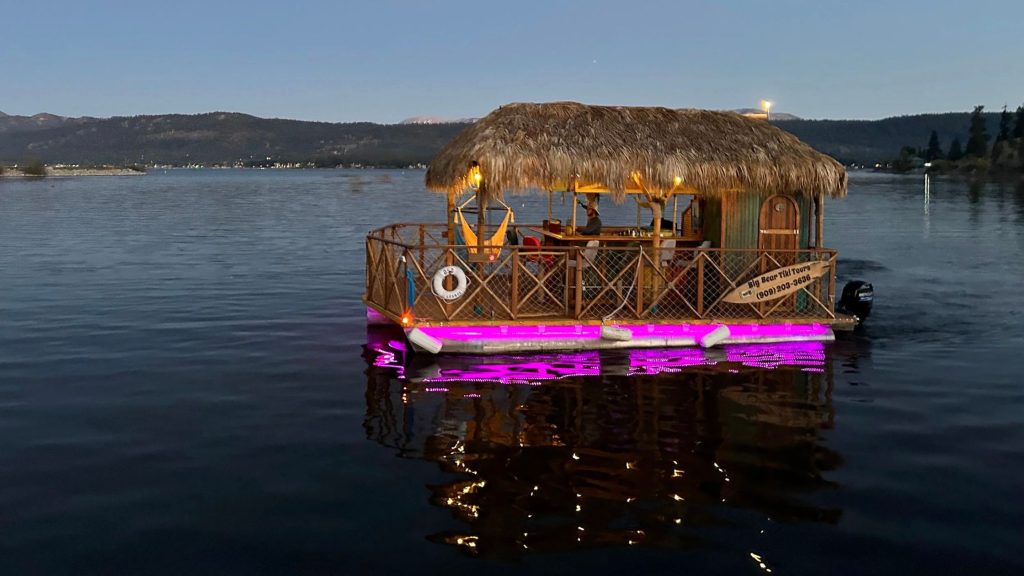
Big Bear Tiki Tours rents self-operated floating tiki bar boats for groups up to six — a thatch-roofed platform with Bluetooth audio and a cooler you bring yourself. It books out quickly on summer weekends. Departures from the Pine Knot Marina area; check their website for current pricing and availability, and reserve mid-week if possible.
Where to Base Your Trip
Big Bear Valley naturally divides into four stay zones, each with a distinct character and proximity to different activities.
Pine Knot Village / South Shore
The commercial heart of Big Bear Lake — restaurants, shops, and event venues within walking distance, with marinas close by and Village Green concerts walkable. Vacation rentals range from two-bedroom cabins to larger homes sleeping eight or more, typically running $200–$450 per night in peak season. The energy here is high on weekends, which suits groups looking for proximity to activities over seclusion.
Moonridge
Perched above the south shore near Bear Mountain and the Alpine Zoo, Moonridge runs quieter than the Village with a mix of mountain cabins and newer builds well-suited for groups prioritizing ski access or separation from the main drag. Rentals here lean larger and include more hot-tub-and-deck properties, typically $300–$600 per night at peak.
Fawnskin / North Shore
The slowest-paced and most scenic base in the valley. Fawnskin is a 20-minute drive from the Village, with direct access to Cougar Crest, the Woodland Trail, the Discovery Center, and the best bald eagle viewing. North shore rentals tend to be older, often lakefront, and competitively priced relative to the south. The tradeoff is distance from the Village restaurant scene. Browse Lake.com’s Big Bear vacation rental inventory for current availability.
Big Bear City
East of the lake and removed from the resort energy, Big Bear City offers the most affordable cabins in the valley, along with the Historical Museum and the closest access to the Gold Fever Trail and Holcomb Valley. A good base for groups focused on hiking and off-road exploration.
One Last Look
When the last sky chair drops its passengers above 8,000 feet, and the lake goes orange below, Big Bear is at its simplest: pine air, high altitude, and enough distance from the coast to think clearly.
By the time you’ve had dinner in the Village and driven back to a cabin where the pines are closer than the neighbors, it becomes obvious why return trips get planned before the first one ends. Lake.com’s Big Bear vacation rentals cover the full range — from one-room hideaways on the north shore to lakefront homes that hold the whole extended family.