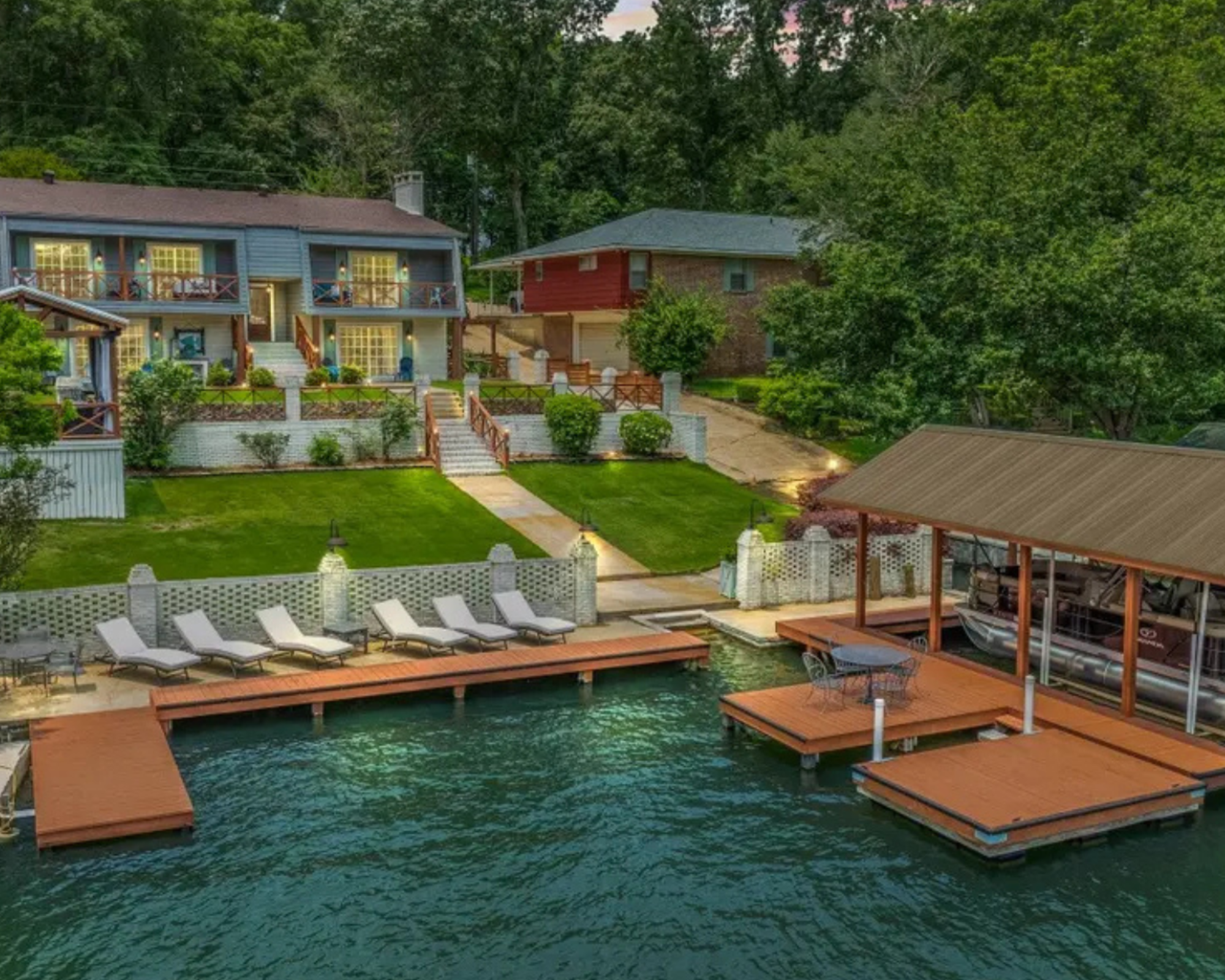

The lake is the reason you’re going. The house is the trip. So, in this article we’re going to dive deep into how to choose a lake home for a big family trip.
The lake doesn’t change much between one rental and the next. What changes, and what determines whether the week feels like the vacation everyone imagined or a logistical stress test in a house that never quite fit — is the house. The kitchen that can’t handle nine people making breakfast at the same time. The great room that seats six comfortably and twelve with chairs pulled from the dining table. The deck that turns out to be a narrow strip with nowhere to sit except the one set of patio furniture the listing photo was taken from.
The rest of this series has covered which lake, when to go, how to split the cost, and whether waterfront or lake view fits better. This final piece is the decision that sits underneath all of those: how to choose the specific house that makes the trip work for the specific group you’re bringing. It’s the capstone of the framework our pillar guide to the best lakes for family vacations, and the answer to the question the multi-generational guide opened but didn’t fully close.
The Capacity Problem
“Sleeps 12” is a listing specification, not a livability assessment. A house that sleeps 12 might have a primary bedroom, three standard bedrooms, a loft with twin beds accessible by a pull-down ladder, and a sofa bed in the den. Everyone technically has a place to sleep. Two family members are climbing a ladder in the dark and one couple is listening to the kitchen through a door that doesn’t fully close.
The number worth filtering on before any other is private bedrooms with actual doors — rooms where a family unit can exist as a family unit for some portion of the day without being in a shared space. The multi-generational guide’s recommendation of one bedroom per family unit holds here: a three-family trip needs at least three private bedrooms before any other feature of the house becomes relevant.
Bathroom count follows directly. The formula most families underestimate: count every adult and child in the house, then divide by two. If the result exceeds the number of full bathrooms in the listing, the house will have a morning problem. A morning problem on a multi-generational lake trip — with a grandmother on a medication schedule, a toddler who can’t wait, and three other adults trying to be somewhere before the boat rental window closes — is a trip problem, not an inconvenience.
The Kitchen Question
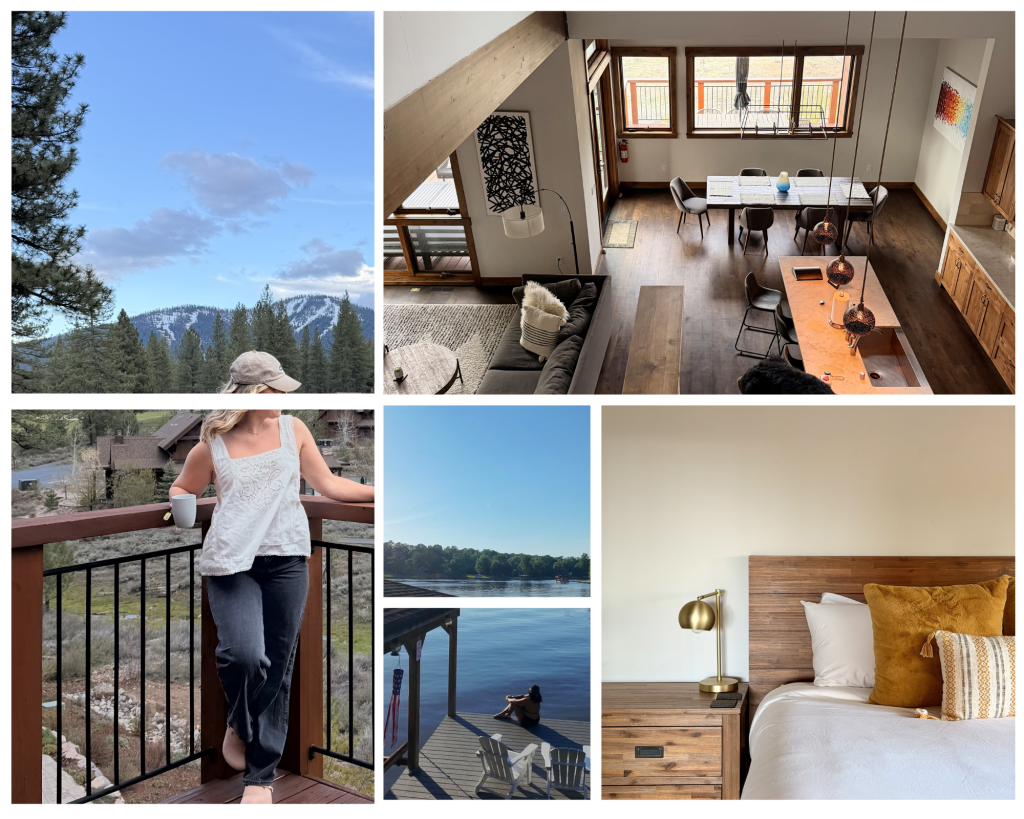
For a group of eight or more people sharing a house for a week, the kitchen is not a room where food is prepared. It is the social center of the trip. The place where the first coffee happens. Where someone is always half-involved in a conversation while doing something else. Where the family dynamic either has room to breathe or doesn’t.
The two variables that determine whether a kitchen works for a big group aren’t the appliances — they’re counter space and seating proximity.
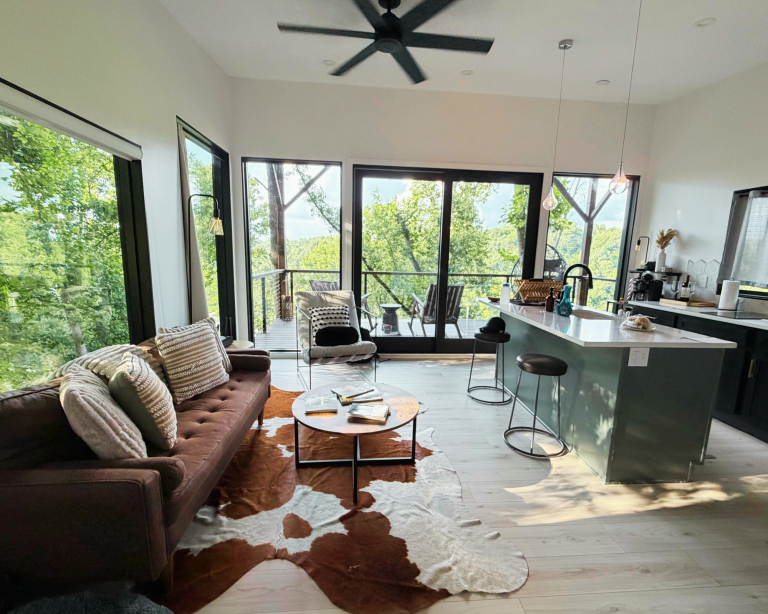
Counter space determines whether three people can work in the kitchen simultaneously without actively getting in each other’s way. Seating proximity — whether there’s an island, a breakfast bar, or a kitchen table within easy conversation distance of whoever is cooking — determines whether the kitchen functions as a gathering point or a room people wait outside of.
Listing photos of kitchens are almost always shot at the widest possible angle from the most flattering corner. The accurate question to ask when reviewing those photos: where would five adults stand if they were all in this kitchen at the same time? If the answer is unclear, or if the photo makes it impossible to answer, that’s information.
Where the Trip Actually Happens
The bedroom count and the bathroom count are the floor of the decision. What elevates a house from functional to genuinely good for a multi-generational group is the common space, and specifically, whether the common space can hold the whole group at once without anyone being on the periphery.
A great room that seats the entire group for a shared dinner or a game night is a different thing than a living room that technically accommodates the headcount if some people are on the floor. The distinction shows up in listing photos when you know to look for it: count the actual seats in the main living area. A sectional that fits eight, a dining table that seats ten with the leaf in, a covered porch with enough chairs for everyone to have coffee together. These are the details that separate a house the whole group wants to be in from one where people gradually retreat to their rooms.
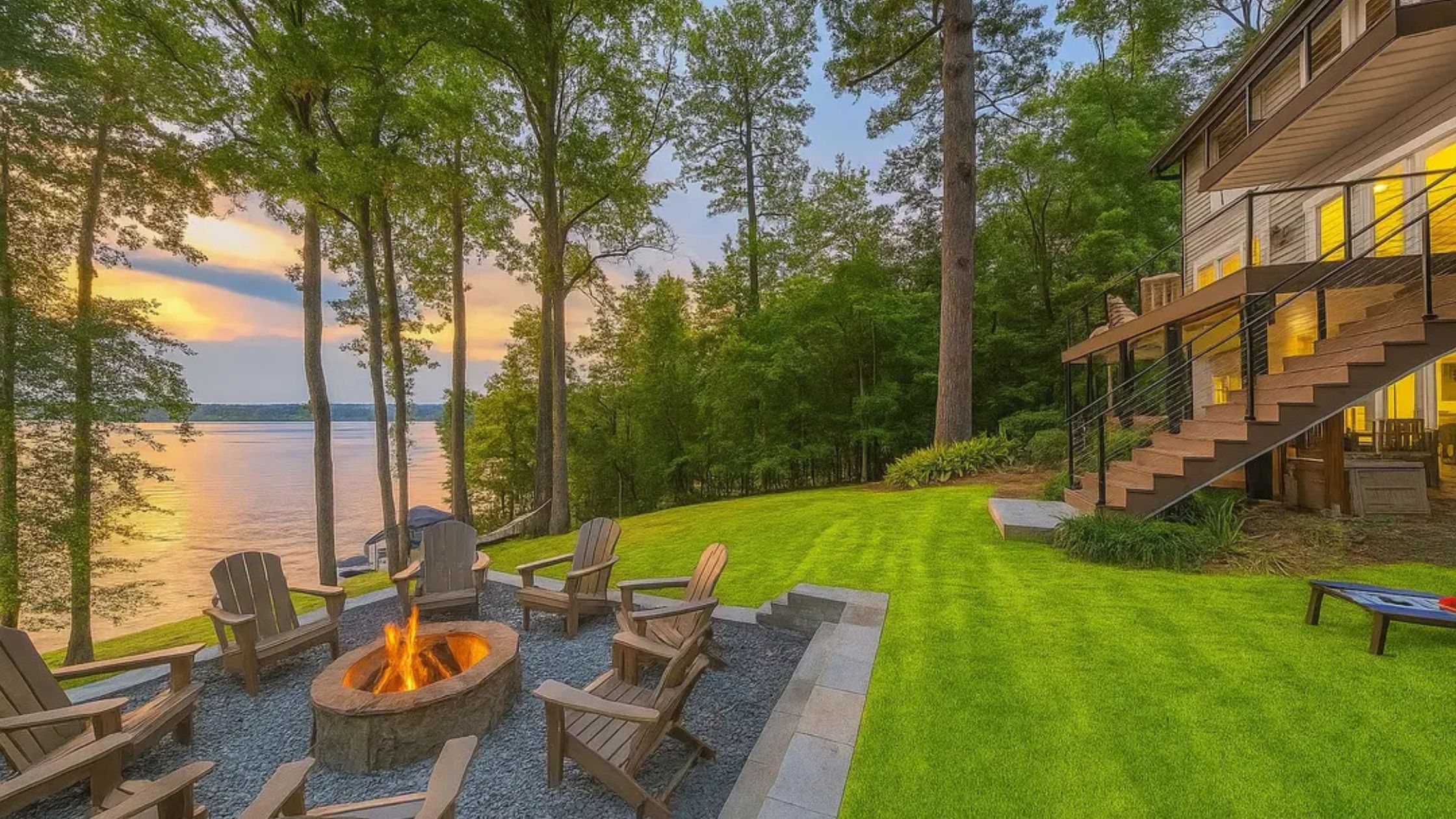
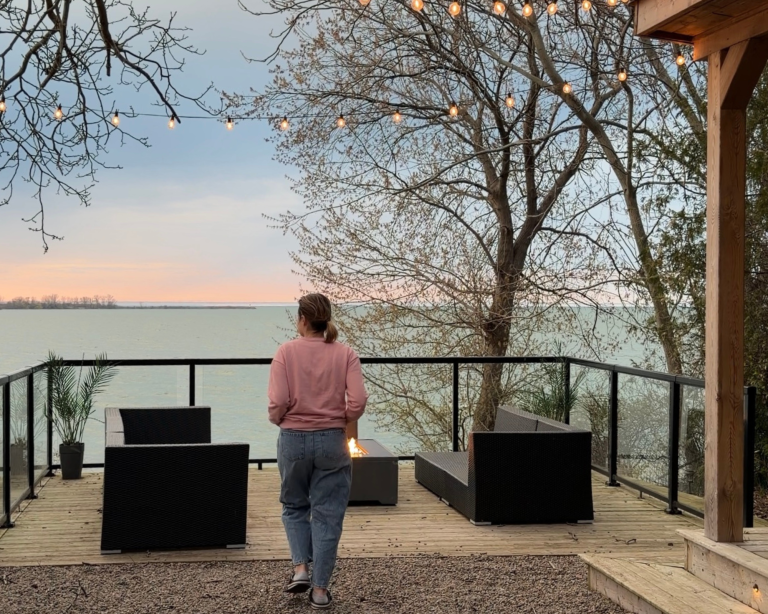
Covered outdoor space deserves specific attention for a multi-generational trip. A screened porch or a shaded deck is where grandparents spend afternoon hours when the sun is high and the younger generation is on the water. It’s where the group reconvenes before dinner. It’s the space that makes the trip feel unhurried. A house without it isn’t wrong, but it changes how the trip works for whoever isn’t spending every afternoon in the water.
Reading Listing Photos Correctly
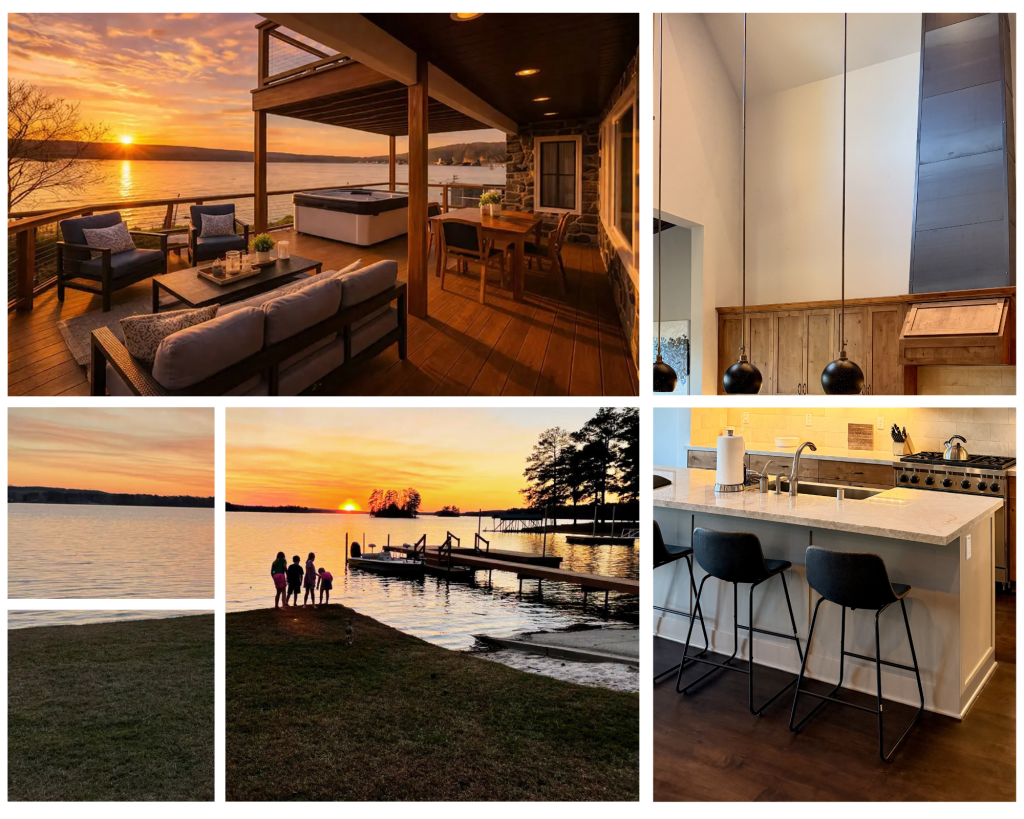
The waterfront vs. lake-view guide covered how listing photos handle water access — shots taken at zoom from the dock rather than showing the path between the house and the water. The same selective framing applies to interior photos, with a few consistent patterns worth knowing.
Wide-angle lenses make rooms look larger than they are. Any photo where the room appears to extend significantly in multiple directions at once was likely taken with a lens that compresses depth and expands apparent width. The bedrooms that look spacious in photos can be the bedrooms where a queen bed, a dresser, and two people’s luggage fill the room to the walls.
The photos a listing doesn’t include are as informative as the ones it does. A listing with twelve exterior photos and three interior ones is telling you something.
A listing with extensive photos of the dock and the view but no photo of the dining table set for the number of people the listing claims to accommodate is telling you something. The absence of a photo of the common space is itself a data point.
The Verification Step Most Groups Skip
Before committing a deposit on a house that has cleared every filter, one message or phone call to the host answers the questions no photo can. The guide to waterfront vs. lake-view rentals recommended asking about the path from the house to the water. The multi-generational guide recommended asking about dock depth and water access configuration. For the house selection itself, the questions that matter most are simpler.
How many people can sit at the dining table at once? Is the internet reliable enough for any family members who need to work? Are there any stairs between the main entry and the ground-floor bedroom? Is there a dedicated parking area for multiple vehicles, or does the driveway become complicated with three or four cars?
None of these questions is unreasonable, and all of them, asked before booking rather than discovered on arrival, are the difference between a week that goes as planned and one that required improvising from day one.
The House Proves How to Choose a Lake Home for a Big Family Trip
Every other decision in this series feeds into this one. The lake is chosen by timing, sunshine, and crowd data. The dates are set around when the reviews peak and when the search volume — and with it, the pricing — eases. The cost is split by a method the group agreed on before anyone fell in love with a specific listing. The property type is chosen based on how the group actually plans to use the water. And because pets are often a big part of the consideration factor, don’t forget to check out the top Pet-Friendly US Lakes as featured in Travel + Leisure.
The house is where all of that work either pays off or doesn’t. A house that holds the group comfortably — that has the bedrooms, the bathrooms, the kitchen, the common space, and the outdoor area the trip actually requires — turns a well-planned lake week into the memory the group is still talking about at the next holiday dinner.
That’s what this whole series was pointing toward. Not the perfect lake. The right house, at the right lake, in the right week, for the specific family that actually showed up.